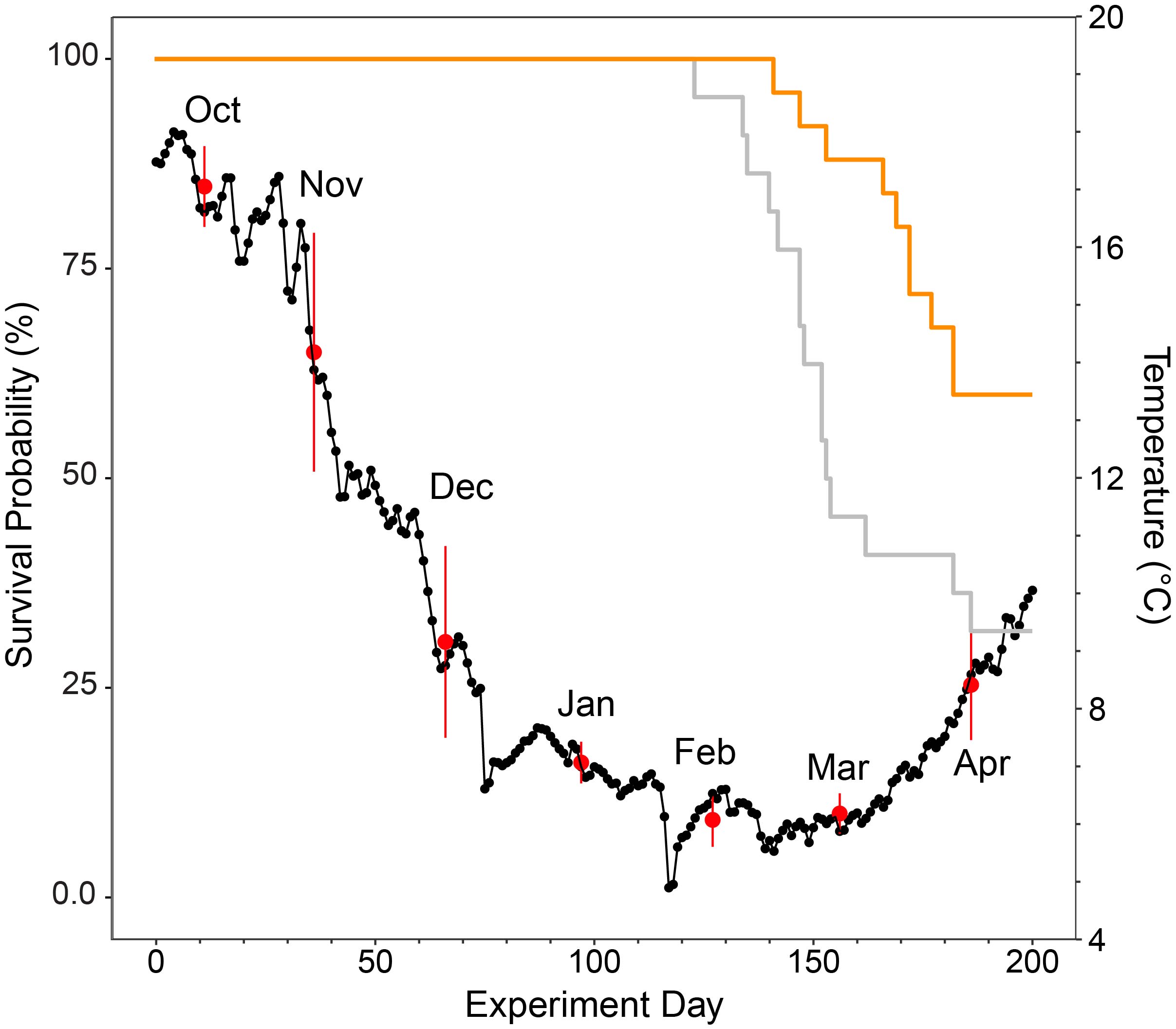
2023 (LISICOS ELIS buoy) (modified after Zavell et al. 2026)
Web cookies (also called HTTP cookies, browser cookies, or simply cookies) are small pieces of data that websites store on your device (computer, phone, etc.) through your web browser. They are used to remember information about you and your interactions with the site.
Session Management:
Keeping you logged in
Remembering items in a shopping cart
Saving language or theme preferences
Personalization:
Tailoring content or ads based on your previous activity
Tracking & Analytics:
Monitoring browsing behavior for analytics or marketing purposes
Session Cookies:
Temporary; deleted when you close your browser
Used for things like keeping you logged in during a single session
Persistent Cookies:
Stored on your device until they expire or are manually deleted
Used for remembering login credentials, settings, etc.
First-Party Cookies:
Set by the website you're visiting directly
Third-Party Cookies:
Set by other domains (usually advertisers) embedded in the website
Commonly used for tracking across multiple sites
Authentication cookies are a special type of web cookie used to identify and verify a user after they log in to a website or web application.
Once you log in to a site, the server creates an authentication cookie and sends it to your browser. This cookie:
Proves to the website that you're logged in
Prevents you from having to log in again on every page you visit
Can persist across sessions if you select "Remember me"
Typically, it contains:
A unique session ID (not your actual password)
Optional metadata (e.g., expiration time, security flags)
Analytics cookies are cookies used to collect data about how visitors interact with a website. Their primary purpose is to help website owners understand and improve user experience by analyzing things like:
How users navigate the site
Which pages are most/least visited
How long users stay on each page
What device, browser, or location the user is from
Some examples of data analytics cookies may collect:
Page views and time spent on pages
Click paths (how users move from page to page)
Bounce rate (users who leave without interacting)
User demographics (location, language, device)
Referring websites (how users arrived at the site)
Here’s how you can disable cookies in common browsers:
Open Chrome and click the three vertical dots in the top-right corner.
Go to Settings > Privacy and security > Cookies and other site data.
Choose your preferred option:
Block all cookies (not recommended, can break most websites).
Block third-party cookies (can block ads and tracking cookies).
Open Firefox and click the three horizontal lines in the top-right corner.
Go to Settings > Privacy & Security.
Under the Enhanced Tracking Protection section, choose Strict to block most cookies or Custom to manually choose which cookies to block.
Open Safari and click Safari in the top-left corner of the screen.
Go to Preferences > Privacy.
Check Block all cookies to stop all cookies, or select options to block third-party cookies.
Open Edge and click the three horizontal dots in the top-right corner.
Go to Settings > Privacy, search, and services > Cookies and site permissions.
Select your cookie settings from there, including blocking all cookies or blocking third-party cookies.
For Safari on iOS: Go to Settings > Safari > Privacy & Security > Block All Cookies.
For Chrome on Android: Open the app, tap the three dots, go to Settings > Privacy and security > Cookies.
Disabling cookies can make your online experience more difficult. Some websites may not load properly, or you may be logged out frequently. Also, certain features may not work as expected.
16 April 2026. We are excited to share that Marine Ecology Progress Series today published our synthesis paper on Black Sea Bass in Long Island Sound!
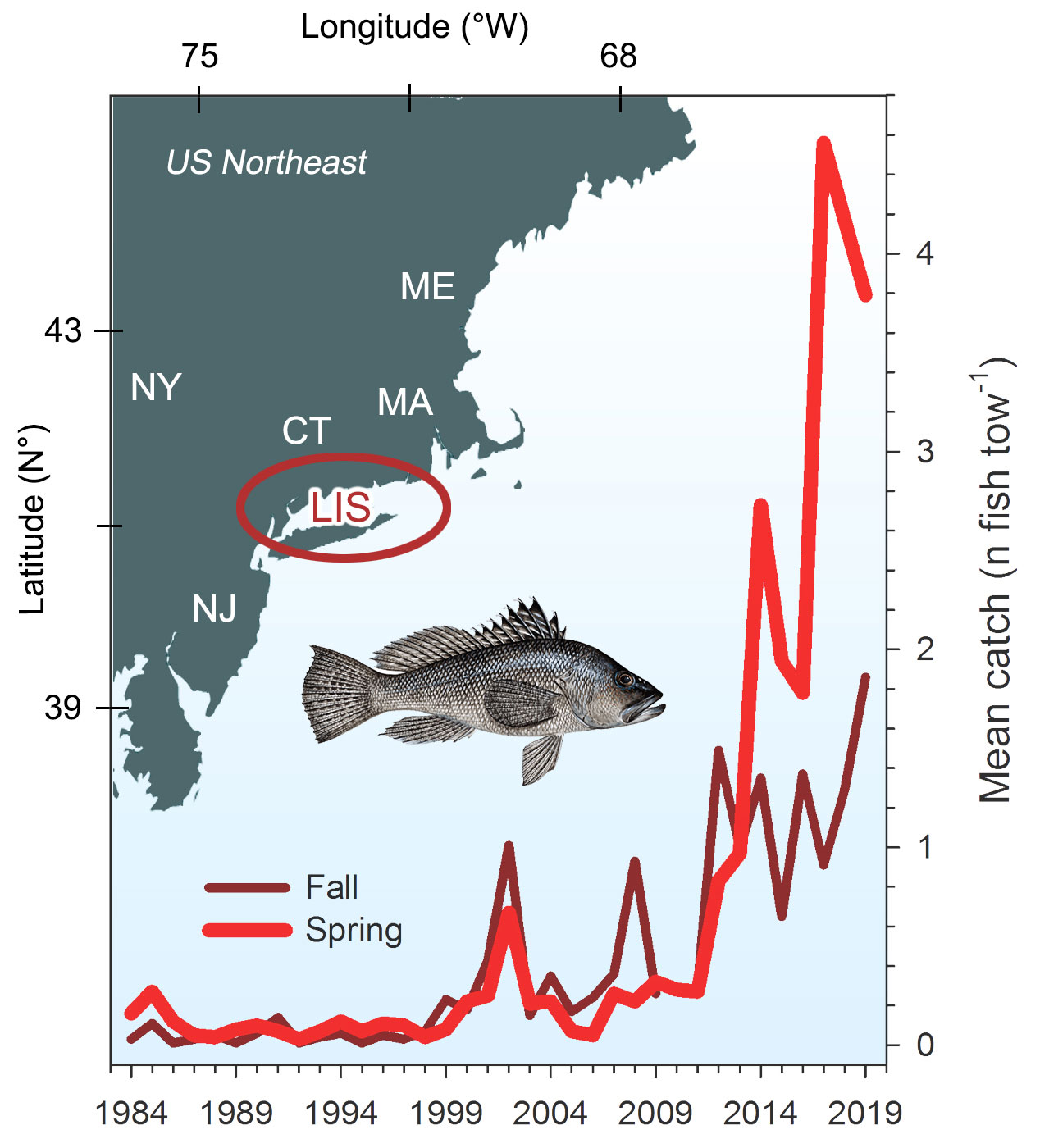
The publication combines laboratory research on juvenile and adult black sea bass with ocean and climate modeling to make the case that these fish are already or at some point soon likely to change their habit of moving offshore in winter. This is because inshore waters are warming, so the fish can stay longer in fall and return earlier in spring, but also because the whole Northwest Atlantic shelf is warming, which reduces the distance the fish need to swim to reach overwinter habitat.
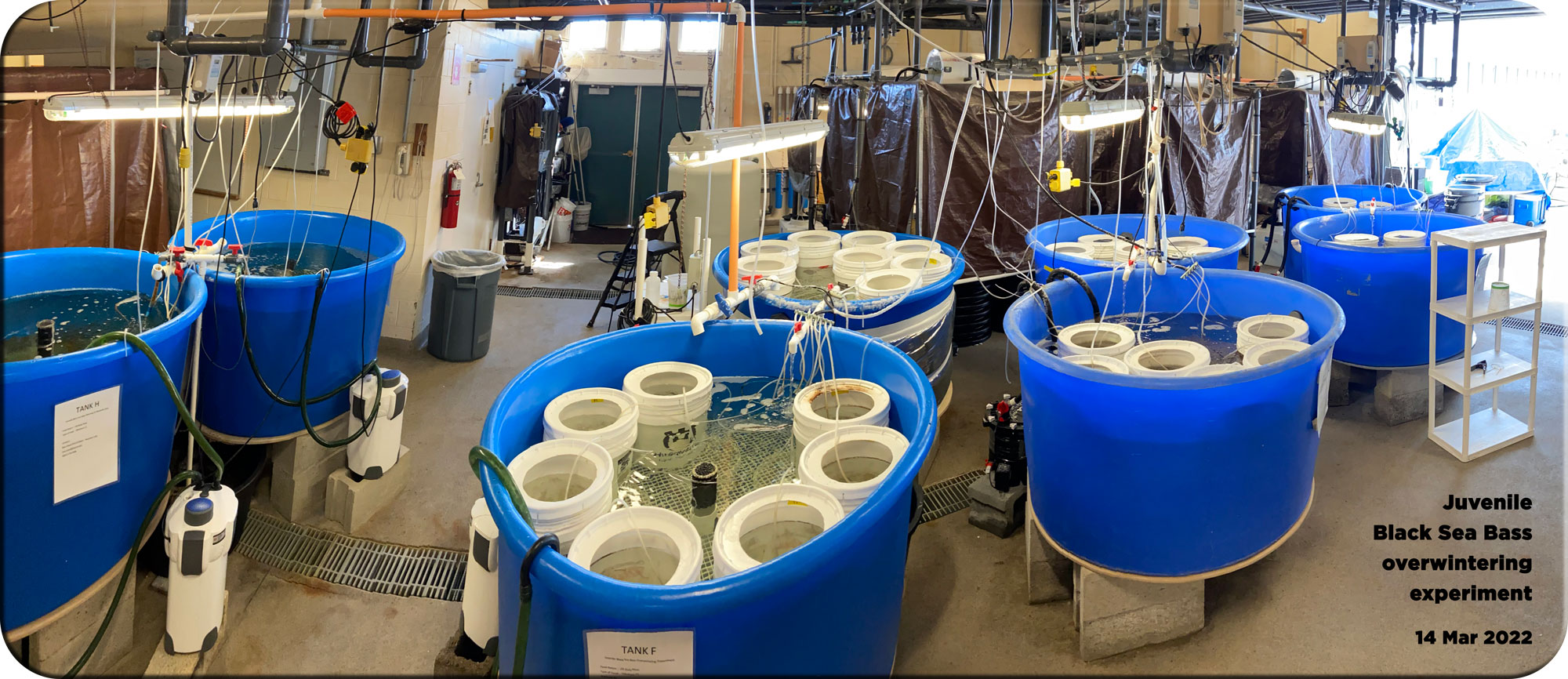
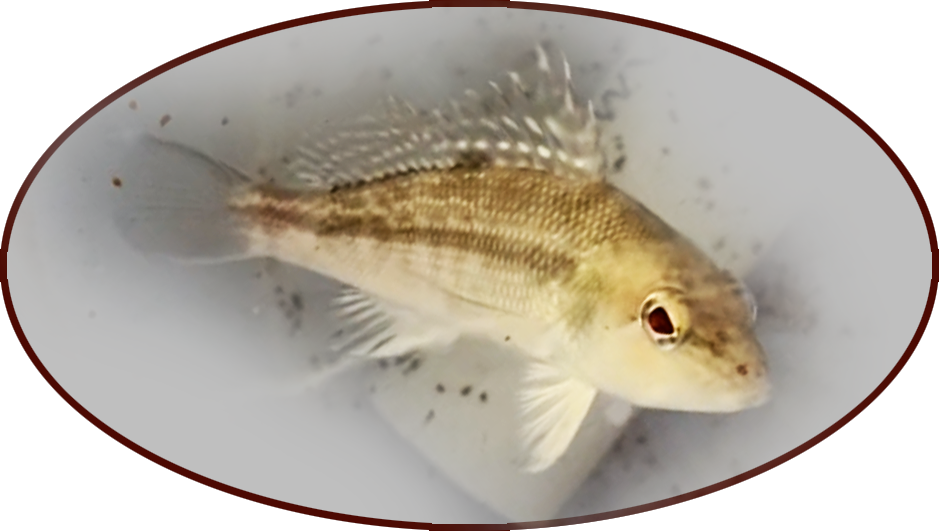
In the laboratory, PhD student Max Zavell with the help of his dedicated undergraduate assistants Matt Mouland and David Barnum conducted 2 overwinter experiments on juveniles to simulate their thermal experience of migrating offshore or remaining within Long Island Sound (LIS). Surprisingly, this showed that overwintering inshore caused only minor reductions in survival (100→84%), led to no loss in lipid reserves, but incurred a growth cost in both length and weight.
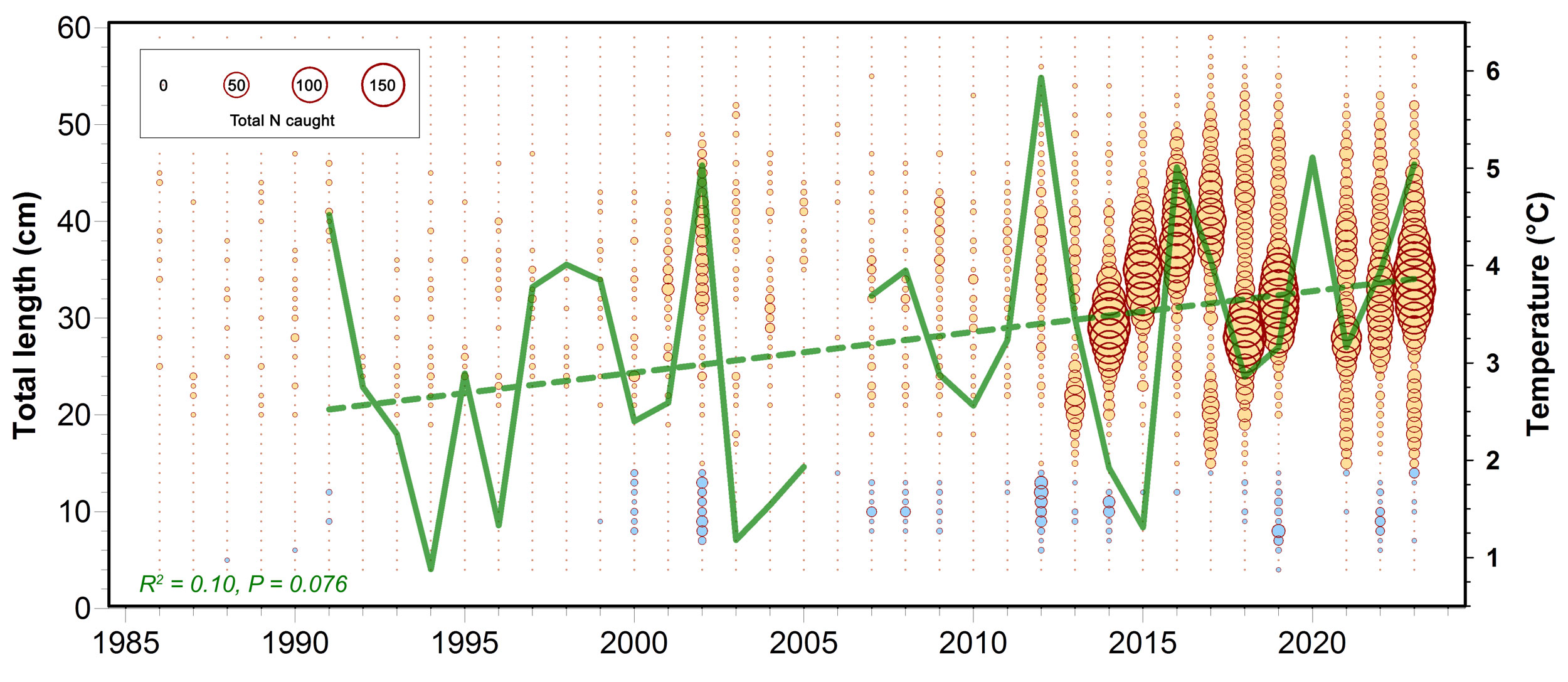
Thanks to the involvement of two inhouse physical oceanography groups (James O'Donnell, Samantha Siedlecki), we were able to project how mean LIS winter temperatures will increase from 3.2°C to 4.8°C by mid-century, which reduces the average time black sea bass cannot live in LIS by 30%, from 95 to 68d per year. A separate shelf model projected the rapid northward movement of the 10°C isotherm in February bottom temperatures on the Northwest Atlantic shelf - this reduces the overwinter migration distance from ~600 to ~120 km by mid-century!
Inshore overwintering will become increasingly feasible for black sea bass, perhaps lead to partial migration that furthers the poleward range expansion of this species.
The publication results from a particularly strong interdisciplinary collaboration of no less than 5 research labs: The Baumann and Schultz lab dedicated to fisheries and evolutionary fish ecology, the Matassa Lab with expertise in benthic ecology, the O'Donnell and Siedlecki groups dealing with modeling projections for nearshore and offshore waters in the North-Atlantic. The publication is an example of inclusiveness, given that the list of authors not only includes the graduate student as the lead, but also two particularly engaged undergraduate students, in addition to two post-doctoral researchers and the 5 more senior faculty.
2023 (LISICOS ELIS buoy) (modified after Zavell et al. 2026)
18 July 2025. We are thrilled to share that Marine & Coastal Fisheries (an AFS Journal) published today the 3rd chapter of Max Zavell's PhD research! The paper asks the simple but pertinent question
Can adult Black Sea Bass overwinter in Long Island Sound, USA?
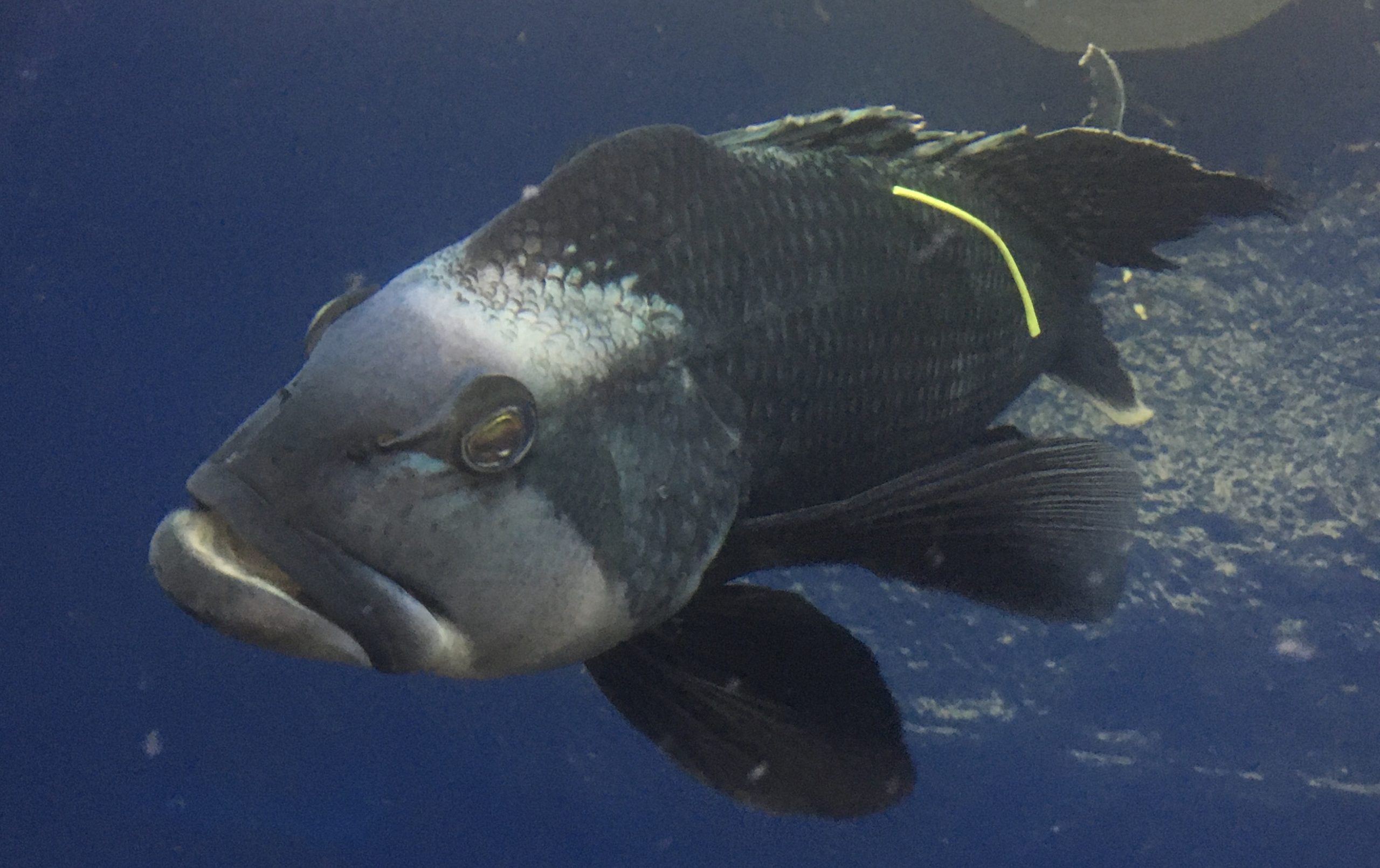
The research followed the fate of 2 x 25 adult black sea bass that were angled in Long Island Sound (LIS) in fall 2022 and then kept at realistic winter inshore temperatures in two large flow-through tanks at the Rankin Seawater Laboratory of the University of Connecticut at Avery Point. The authors repeatedly measured survival, length- and weight growth, gonad investment and lipid contents of experimental and wild fish. They cautiously conclude that
"At present, overwintering in LIS appears possible but likely disadvantageous for Black Sea Bass, because offshore winter migration results in greater energy reserves and subsequent reproductive investment. In the future, however, warming coastal waters will continue to shorten the duration of unsuitable winter temperatures, which could become conducive to year-round inshore residency or partial migration patterns in the northern stock of Black Sea Bass."
The article was published Open Access. Congratulations, Max et al.!
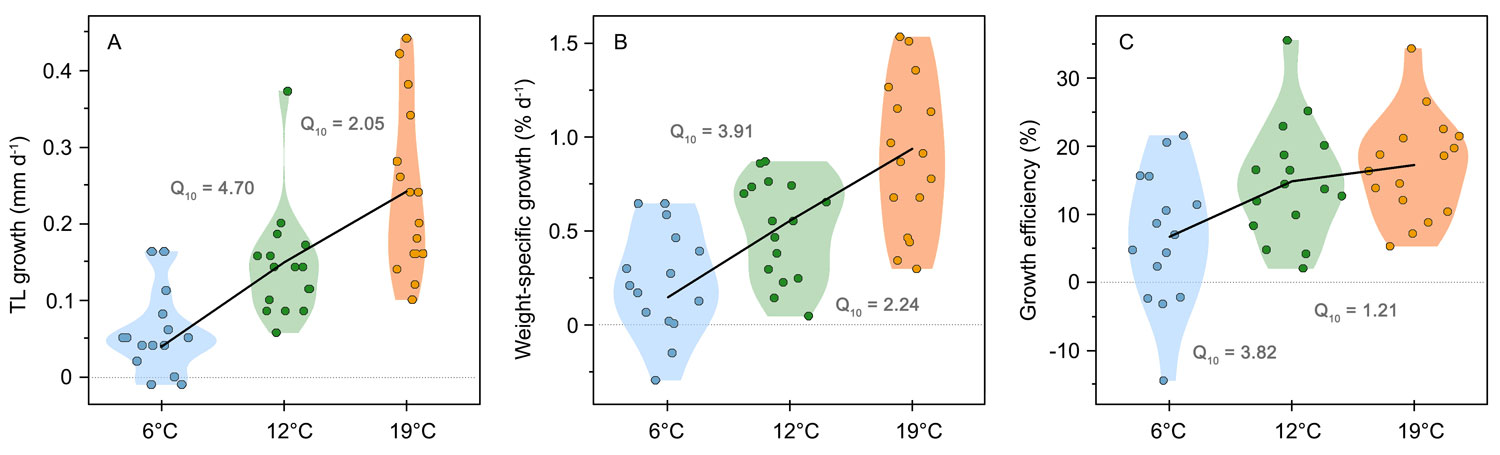
27 December 2023. We are excited to announce that Transactions of the American Fisheries Society just published our first large experimental study on Black Sea Bass overwintering! The work is part of Max Zavell's PhD research and reports on temperature- and food-ration dependent overwinter growth in Black Sea Bass juveniles from Long Island Sound. We reared juveniles individually in two separate experiments, one applying three static temperature treatments (6, 12, 19°C) and another using a seasonal temperature profile to mimic the thermal experience of juveniles emigrating to their offshore overwintering grounds coupled with various food treatments.
We found that Black Sea Bass juveniles showed positive overwinter growth even at temperatures as low as 6°C. However, the best temperature for growth, survival, and lipid accumulation was 12°C, which is close to the presumed conditions at offshore overwintering habitats of this species.
Congratulations, Max, to this great paper! Also, congrats to undergraduate student Matthew Mouland, who helped tirelessly with the rearing and has now deservedly become a co-author.