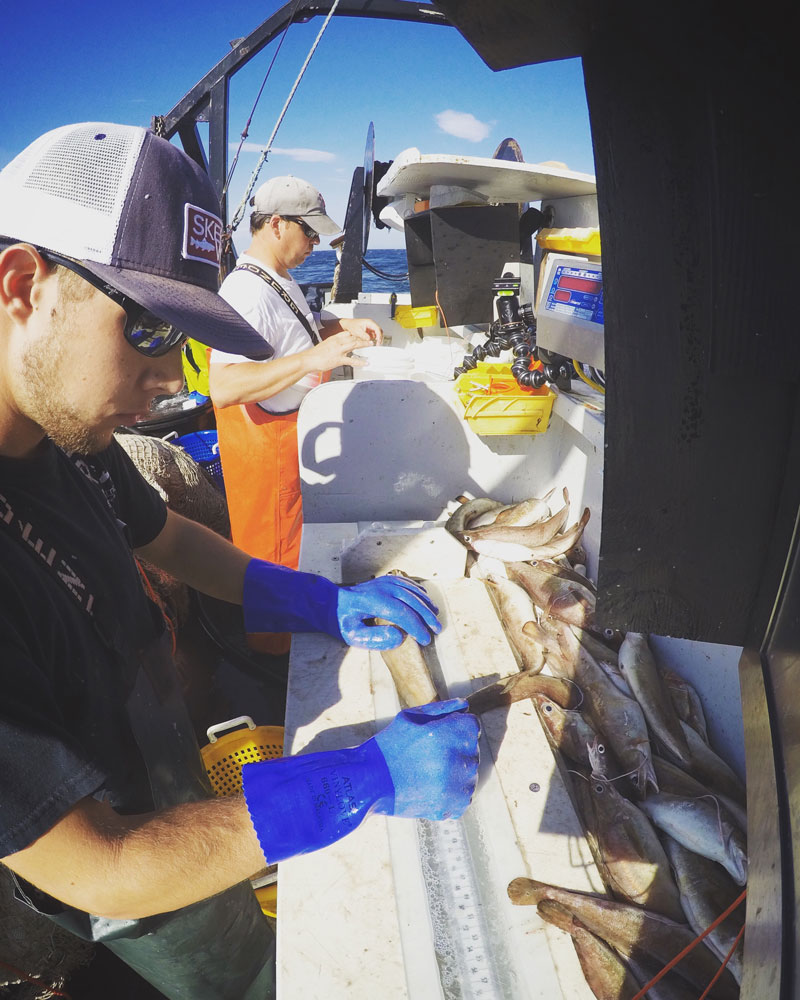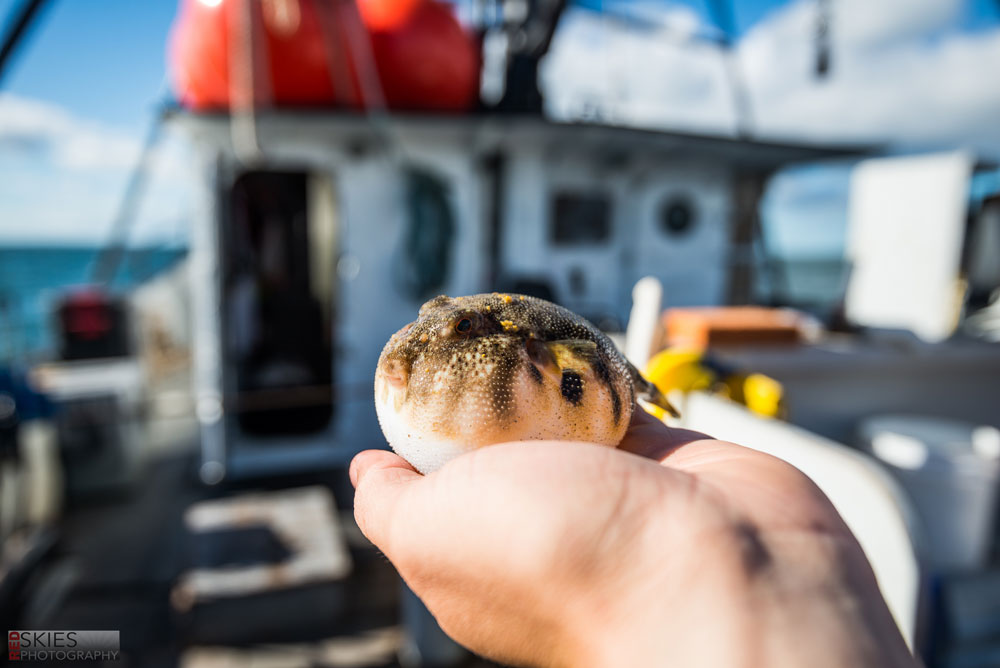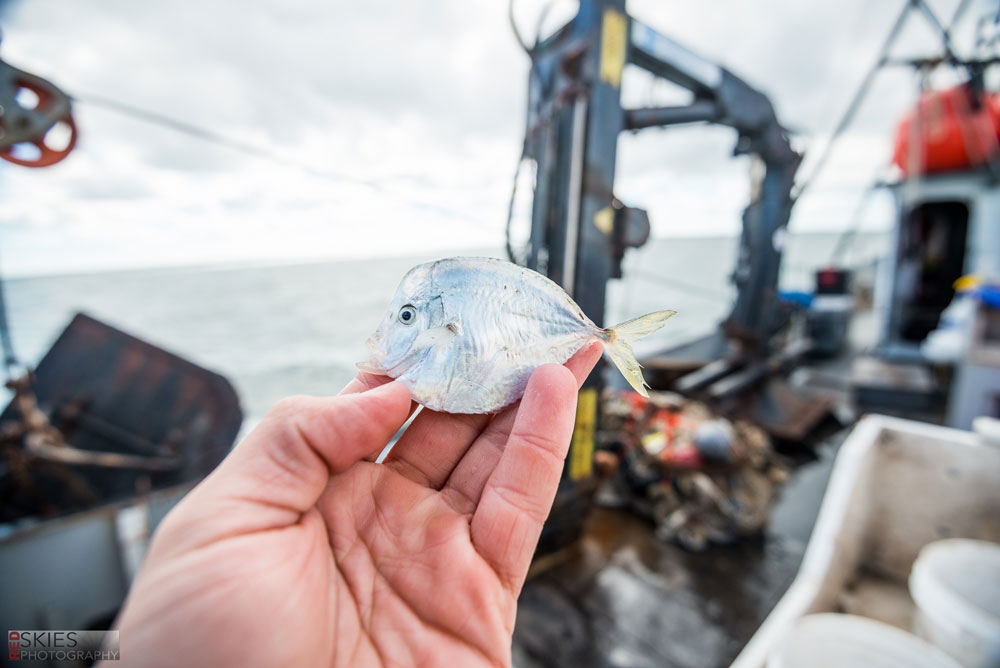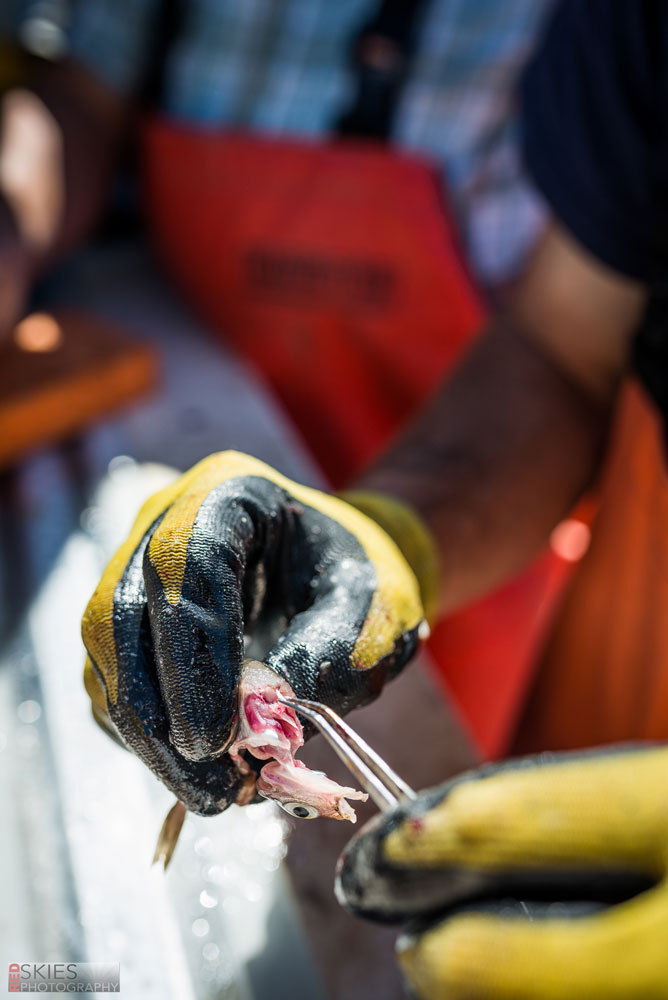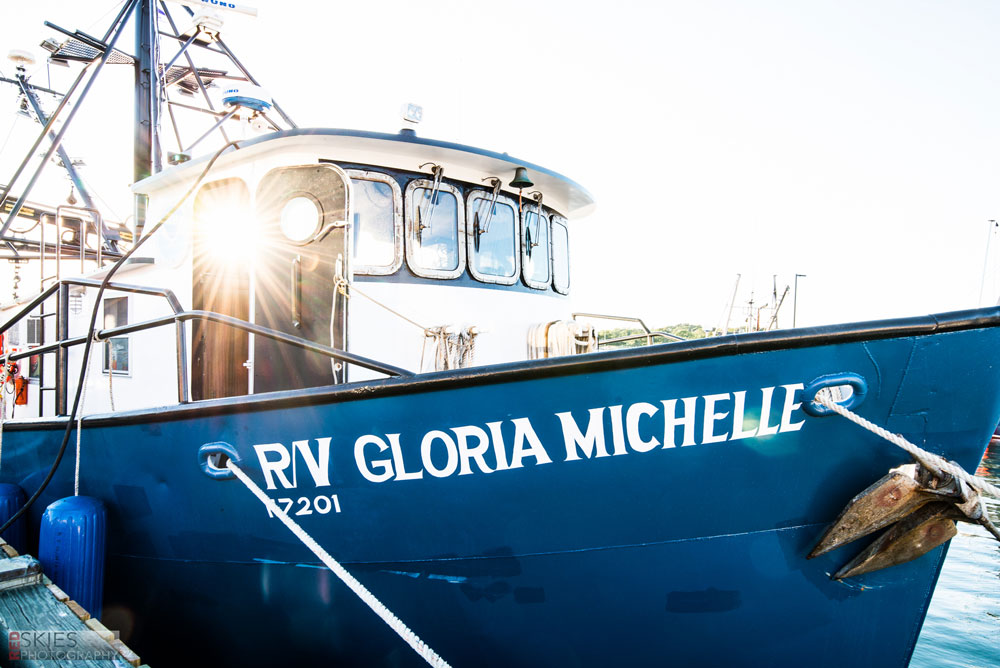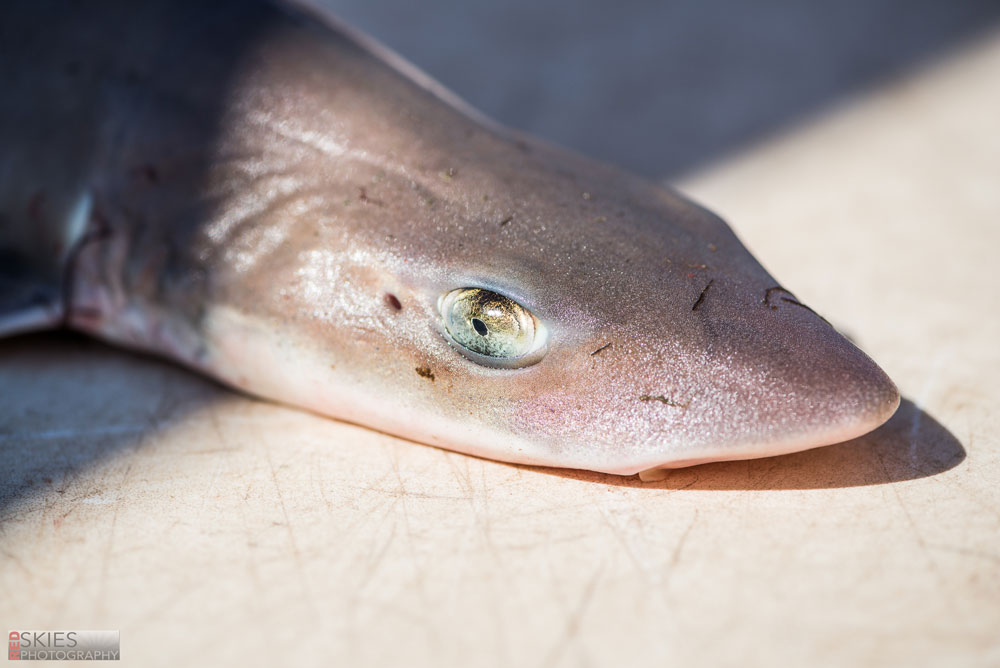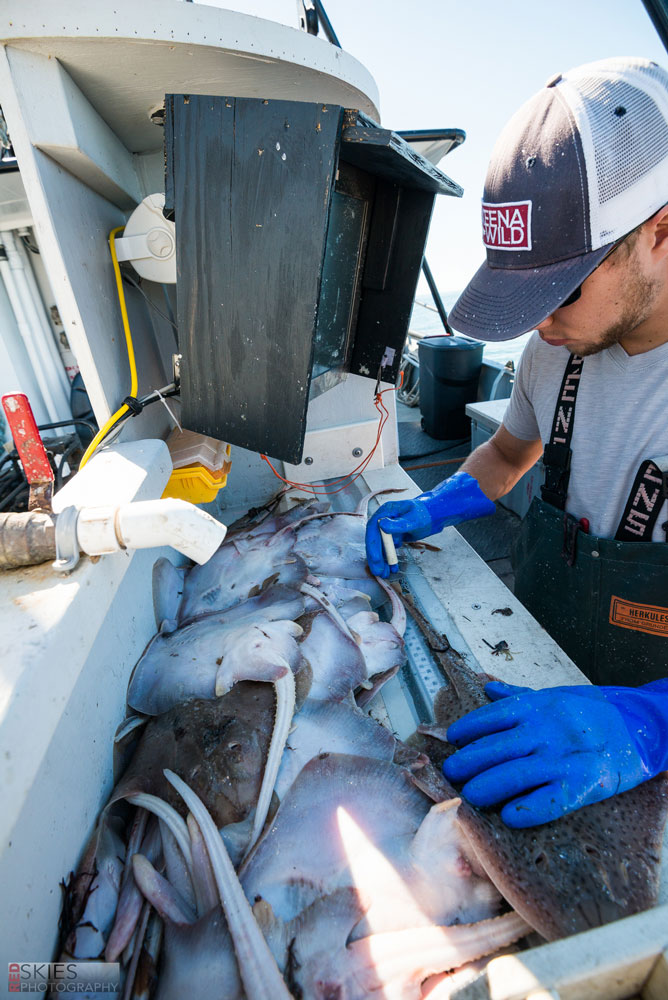
Early mornings, long days, lots of sorting and measuring, short breaks for food, and almost no time to sit for much of the day. That’s science, and that’s exactly what it was like aboard the R/V Gloria Michelle during my four-day stint. Our original hope was to sample Cape Cod Bay and the backside of the Cape, but due to weather concerns we ended up in Cape Cod bay for two days, and then the third was in Buzzards Bay and the Fourth in Outer Vineyard Sound. Why was I aboard this research vessel? Twice each year the State of Massachusetts sends out surveyors and volunteers to sample the benthic fish and invertebrate population. They sample multiple depth strata, and the entirety of Massachusetts coastal waters (by way of a sampling grid). Our lab was particularly hopeful of getting Sandlance (Ammodytes dubius), which I would have sampled for GSI and histology. Sadly, since we didn’t make it out to the backside of the Cape we saw no Sandlance, but we did see plenty of cool fish! Some highlights? A spiny dogfish (my first on this coast), a 4.5’ smooth dogfish, a 48cm Striped Sea Robin (the largest I’ve ever seen!), a few Red Cornetfish, a handful of Atlantic Moonfish, and a few dwarf goat fish. I got a crash course in otolith removal from Haddock, Winter Flounder, Fluke, and Kingfish, as well as learned how to ID many fish I’ve never seen before. It was a wonderful trip, and something I highly recommend every Biological Oceanographer (or fish biologist) volunteer for!
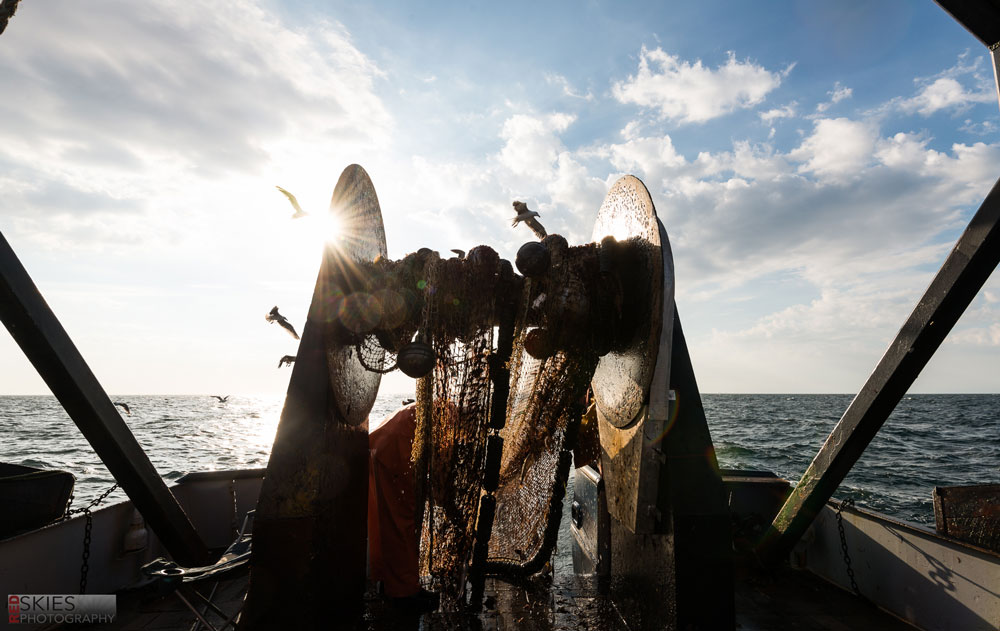
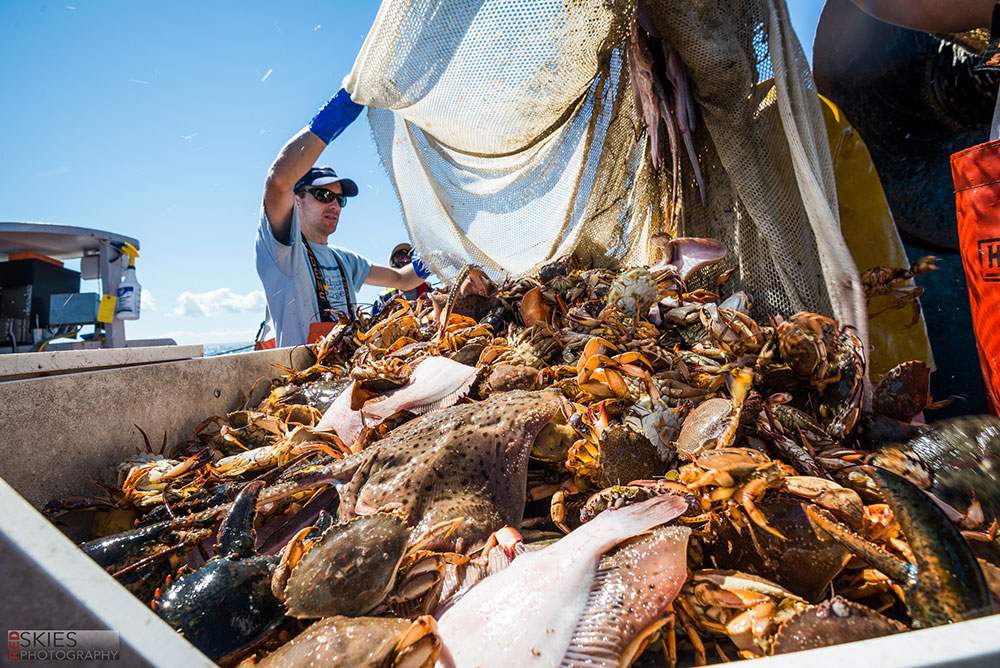 On 15 September 2016, the bottom trawl net is emptied onto the R/V Gloria Michelle for the crew to sort, weigh and measure the catch