By Gabe Redmond
My experience over the course of this project and my time at this REU was incredible. Getting hands-on in fieldwork was a dream come true. I loved to work with creatures like the Atlantic Silversides, gain so much knowledge about them, how they grow, and how important they are to the ecosystem.
Doing the project was really cool and very fun. Getting to understand each step of the process until we reached our final goal was very cool and interesting. I really enjoyed being around a big group of people who were also intrigued and excited about what we were going to find. I had an amazing mentor who stood by constantly helping me and working right alongside me, and teaching me all the neat tips and tricks to everything, something I will never forget.
I got to meet so many incredible people and personalities, and being able to see the excitement, the concentration, and so much more is something that can’t be put into words. It’s this feeling that is so extravagant, having such a great group of people that I would consider friends was such an incredible honor to have worked alongside them. If any of them ever asked me to come back up and help any time during the future, I would come back and work with or for any of them.
I could not have asked for a better experience and I am very happy that I get to bring so much knowledge with me towards my future goals and all the friends and contacts with me as well.
Month: July 2026
NSF-REU experiment reveals surprising heat tolerance of silverside embryos
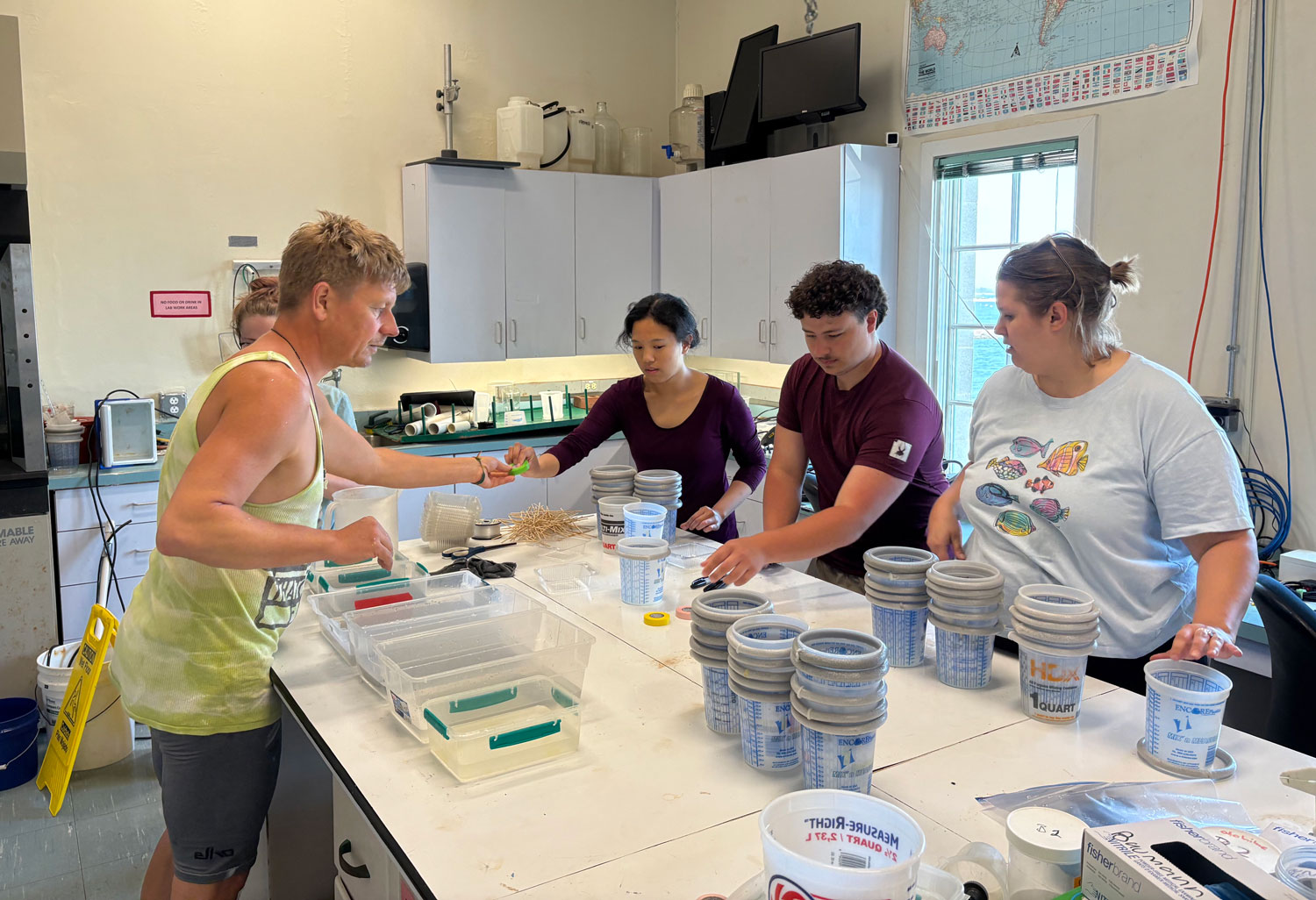
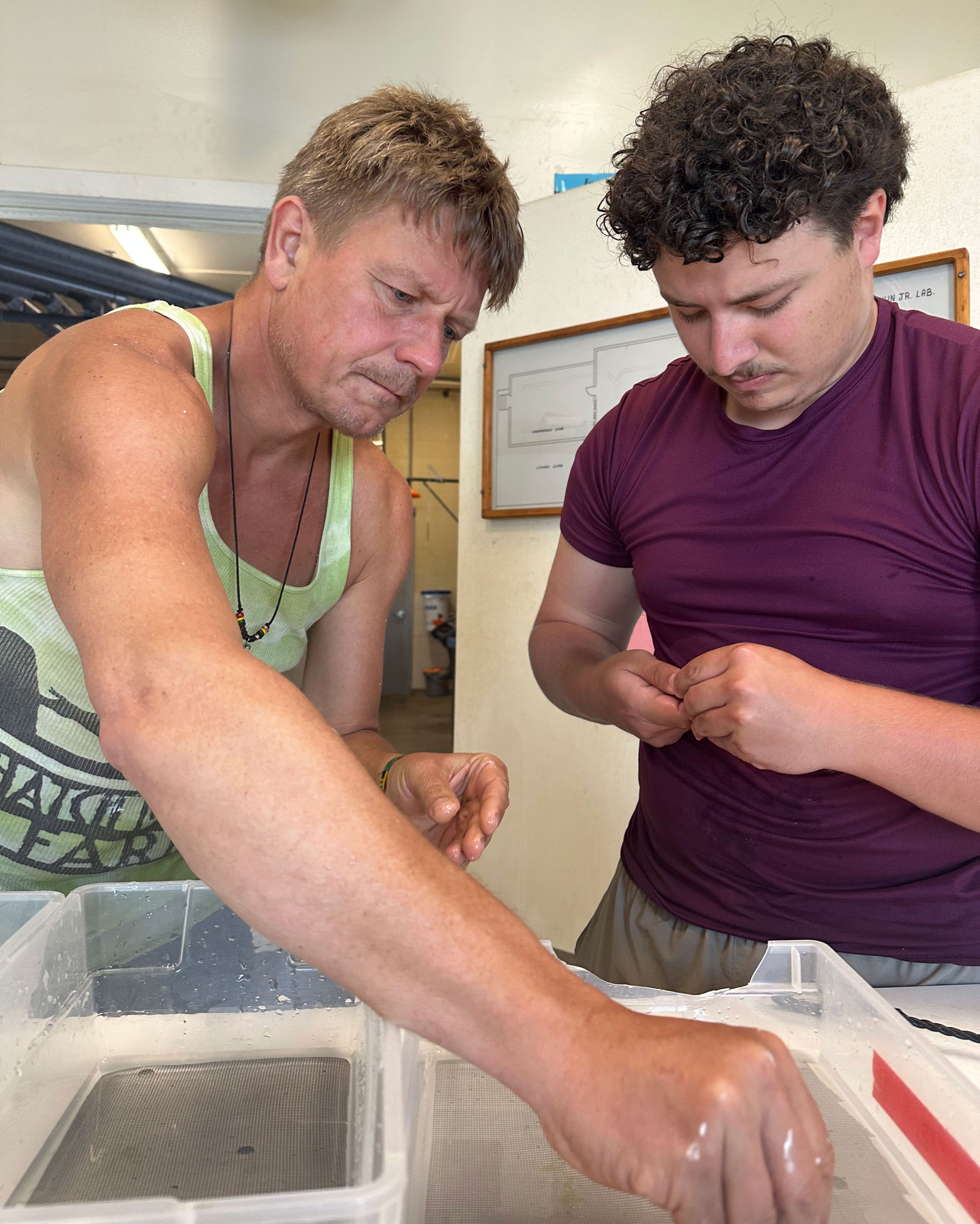
3 July 2026. Just in time for America250 celebrations, we want to share our own small cause of joy and accomplishment. The team, NSF-REU student Gabe Redmon, graduate student Emma Siegfried, and Hannes Baumann, just finished the second and last experiment on Atlantic silverside embryo heat tolerance. The data will become part of a globally distributed experiment on fish embryo heat sensitivity (Thermal Ecology Alliance, P. Pottier), hopefully helping to reveal broader evolutionary and ecological patterns across taxa.
In the most work-intensive moments, the team could not have succeeded without the help of Hermione Lao (NSF-REU 2026), graduate students Vicky You & Hannah Roby, and Hiryu Shinand (undergrad). Thank you!
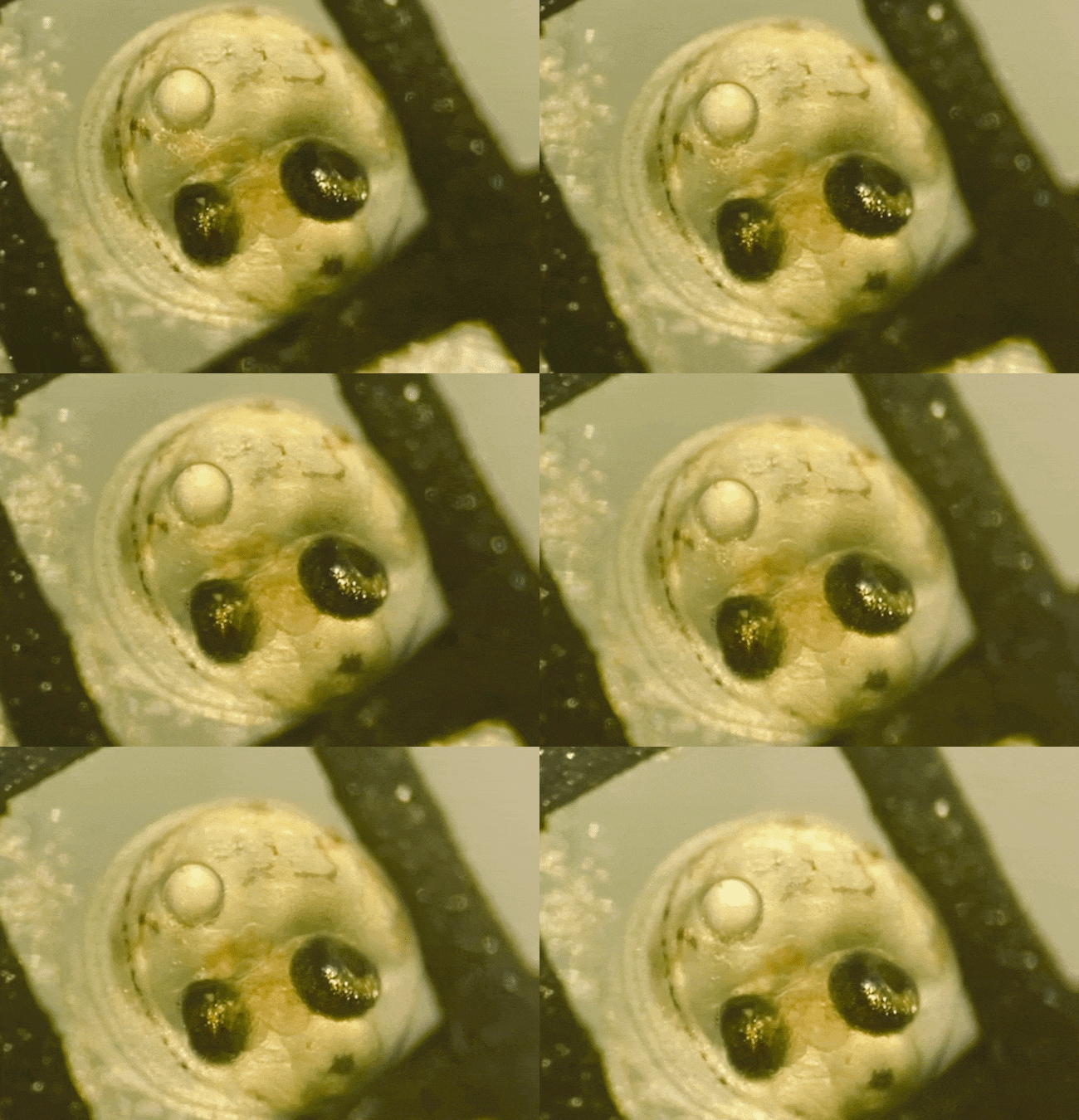
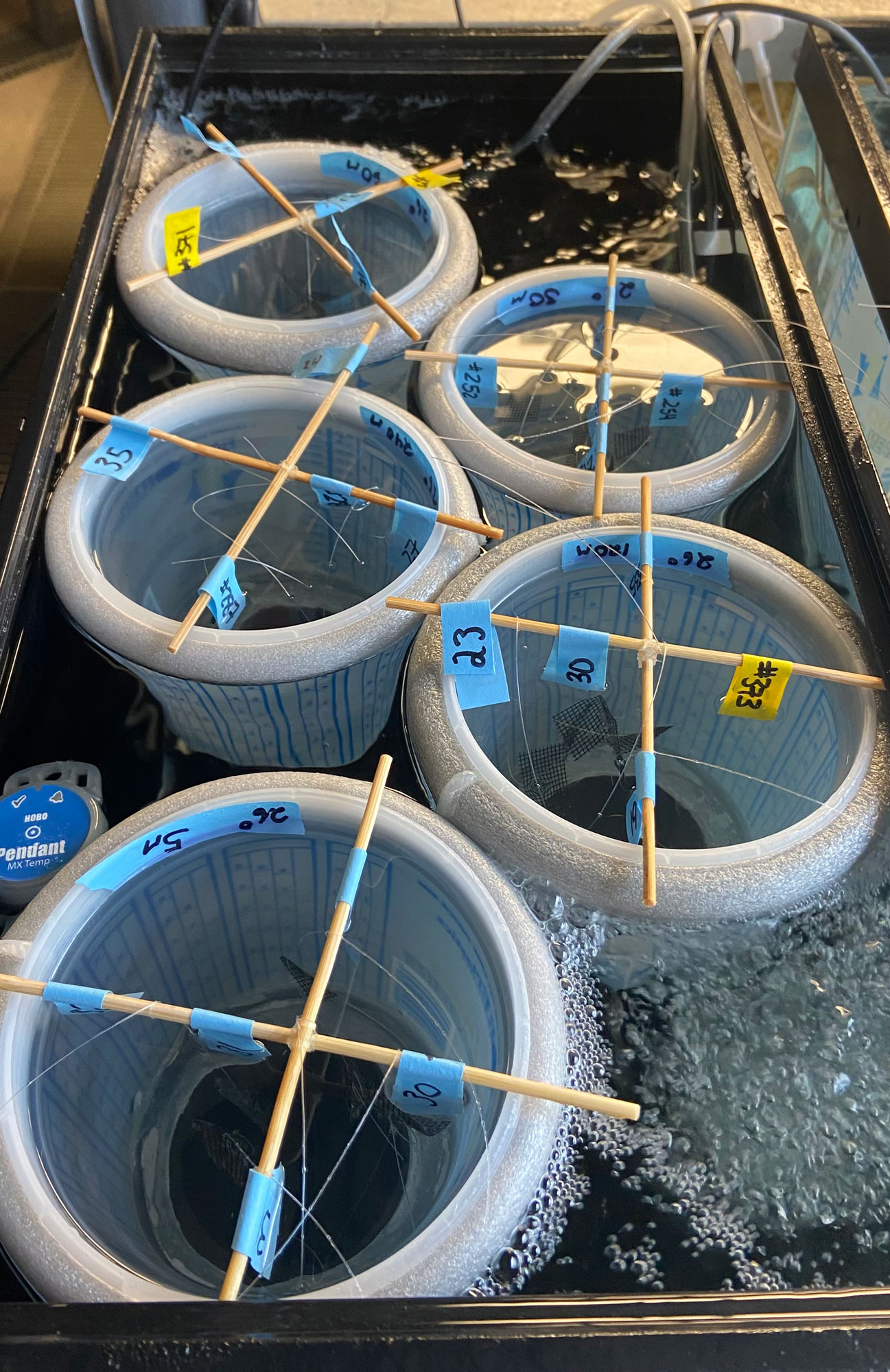
The general experimental design was straightforward to make it broadly adaptable across systems. The goal was to expose newly fertilized fish embryos to heat stress and quantify their mortality. Choose a presumed stressful range of temperatures, vary the duration of the exposure, assess it at two developmental stages (early vs. advanced). Generally, silversides make great model organisms; they have been studied for decades and repeatedly rose to fame for revealing novel eco-evoluationary patterns (e.g., Conover, Therkildsen et al., Akopyan et al., Murray et al.).
However, the thermal sensitivity of Atlantic silverside embryos had not yet been robustly quantified.
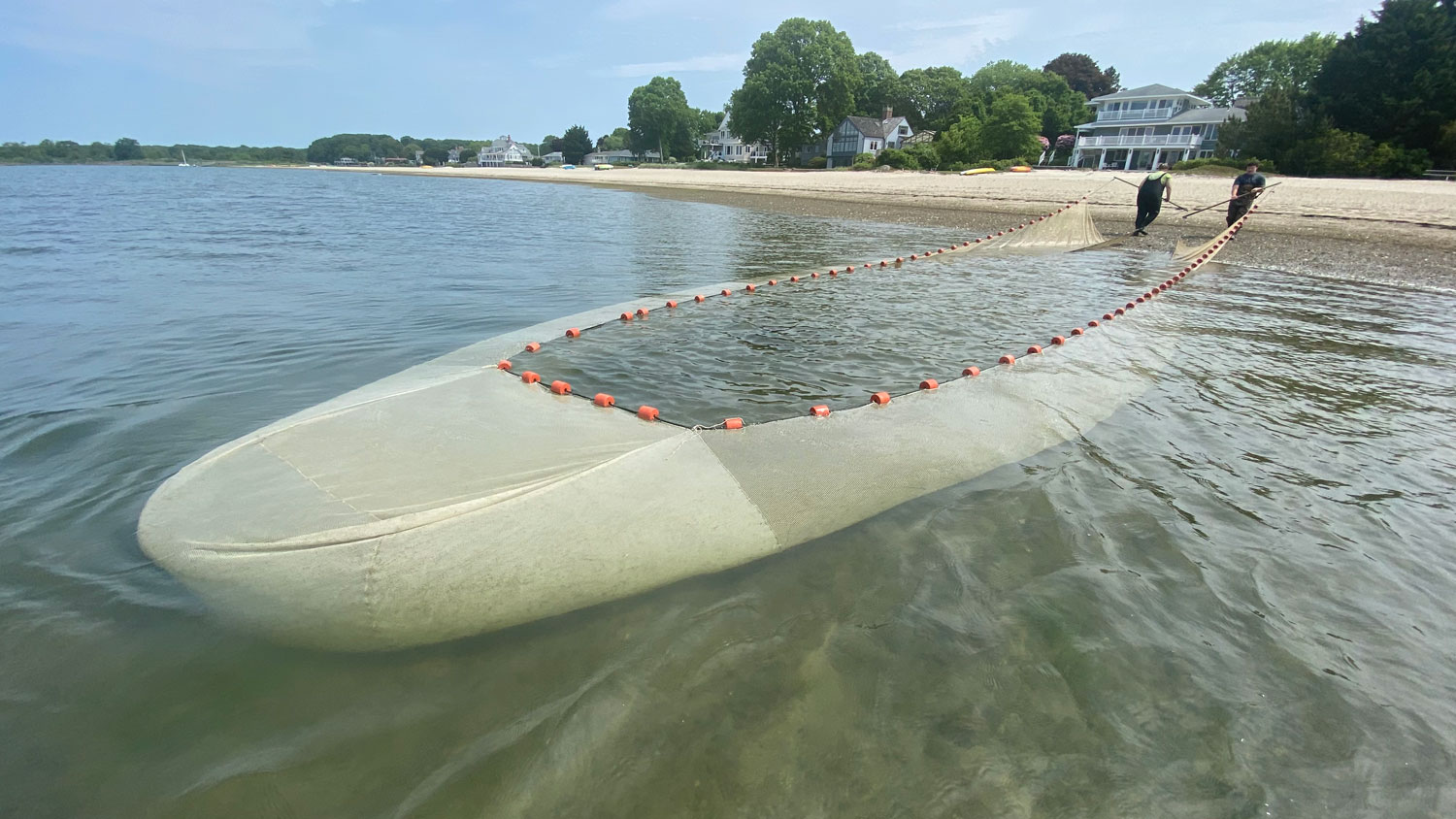
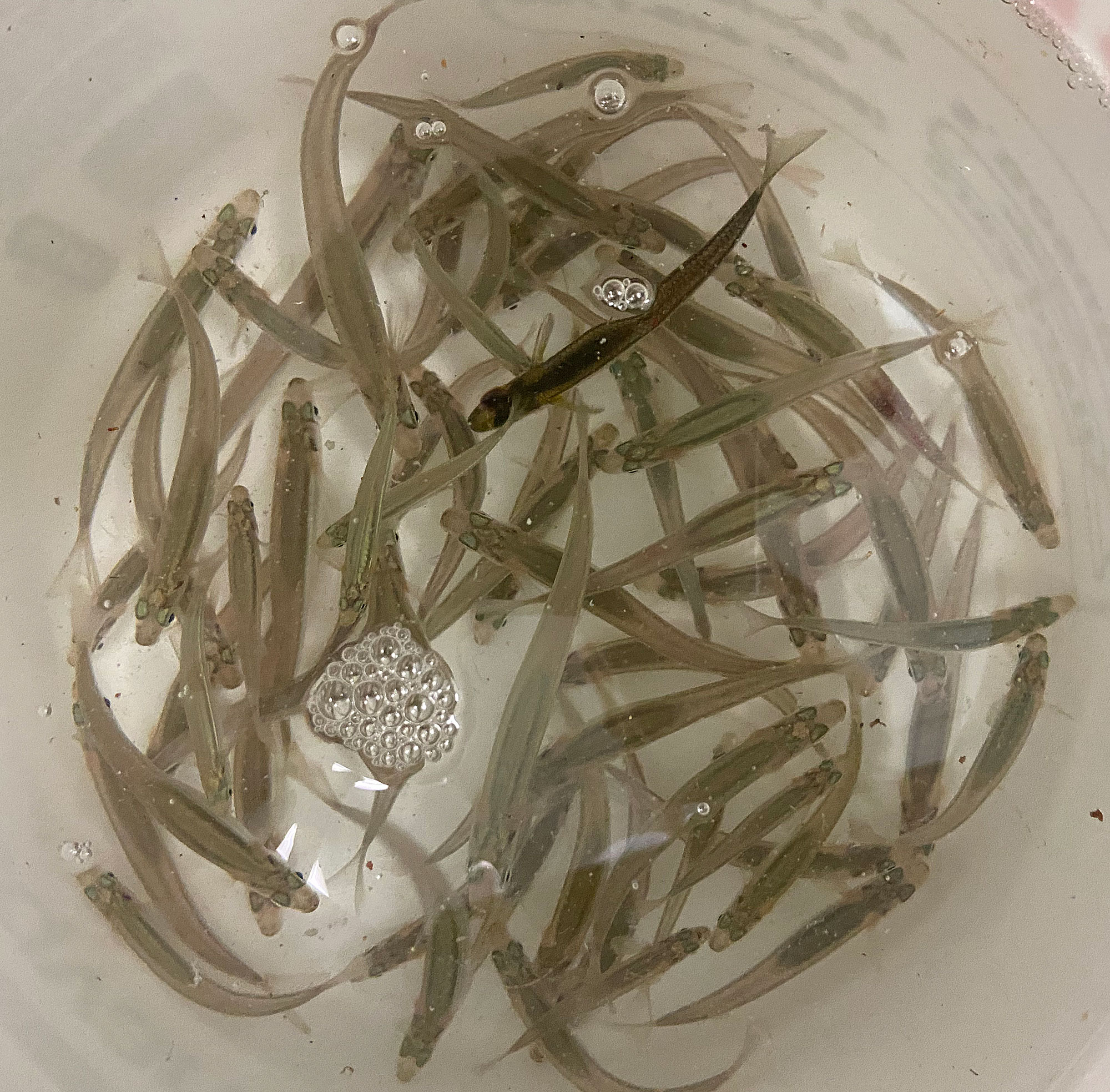
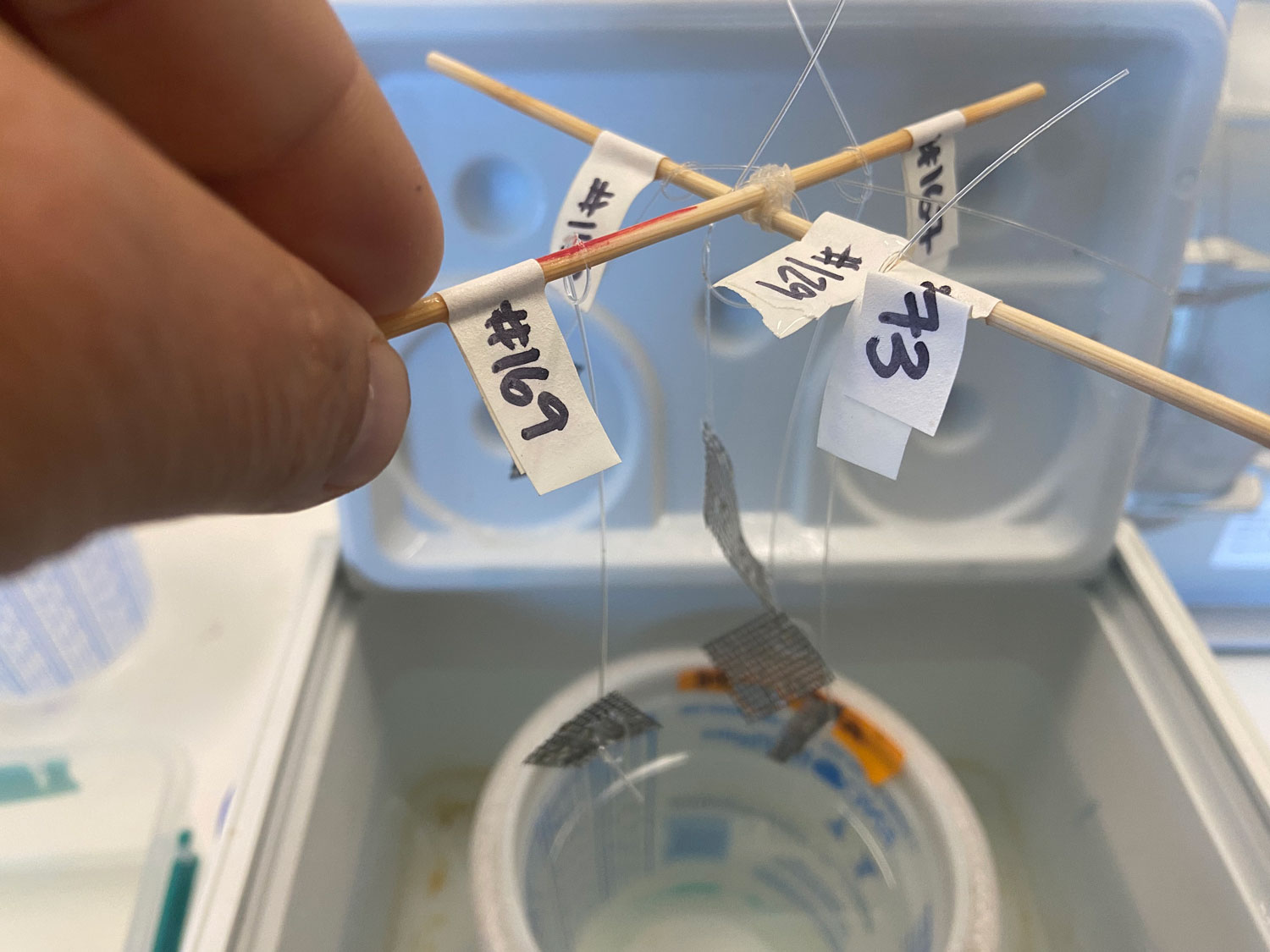
The project is a central part of Gabe Redmon's NSF-sponsored Research Experience for Undergraduates (REU, UConn-MysticAquarium, NSF #2349353). Gabe discovered early that 'straightforward' does not equal 'easy' or 'low effort'. First lesson; silversides don't particularly care about Mo-Fr schedules, they are on a moon schedule, which influences the tides. For good quality experiments, it is best to collect adults right before they spawn on full and new moons. And with all the events that than need to follow in short order; there simply is no way to avoid weekends. Luckily, Gabe was completely unflinched by any of that; his dedication and curiosity were outstanding. Together, we designed some novel rearing designs to allow tracking groups off embryos through hatching. Together, we went to Mumford Cove to collect spawning-ripe adults with a beachseine. Twice.
Together - and with the necessary portion of luck - we pulled it off.
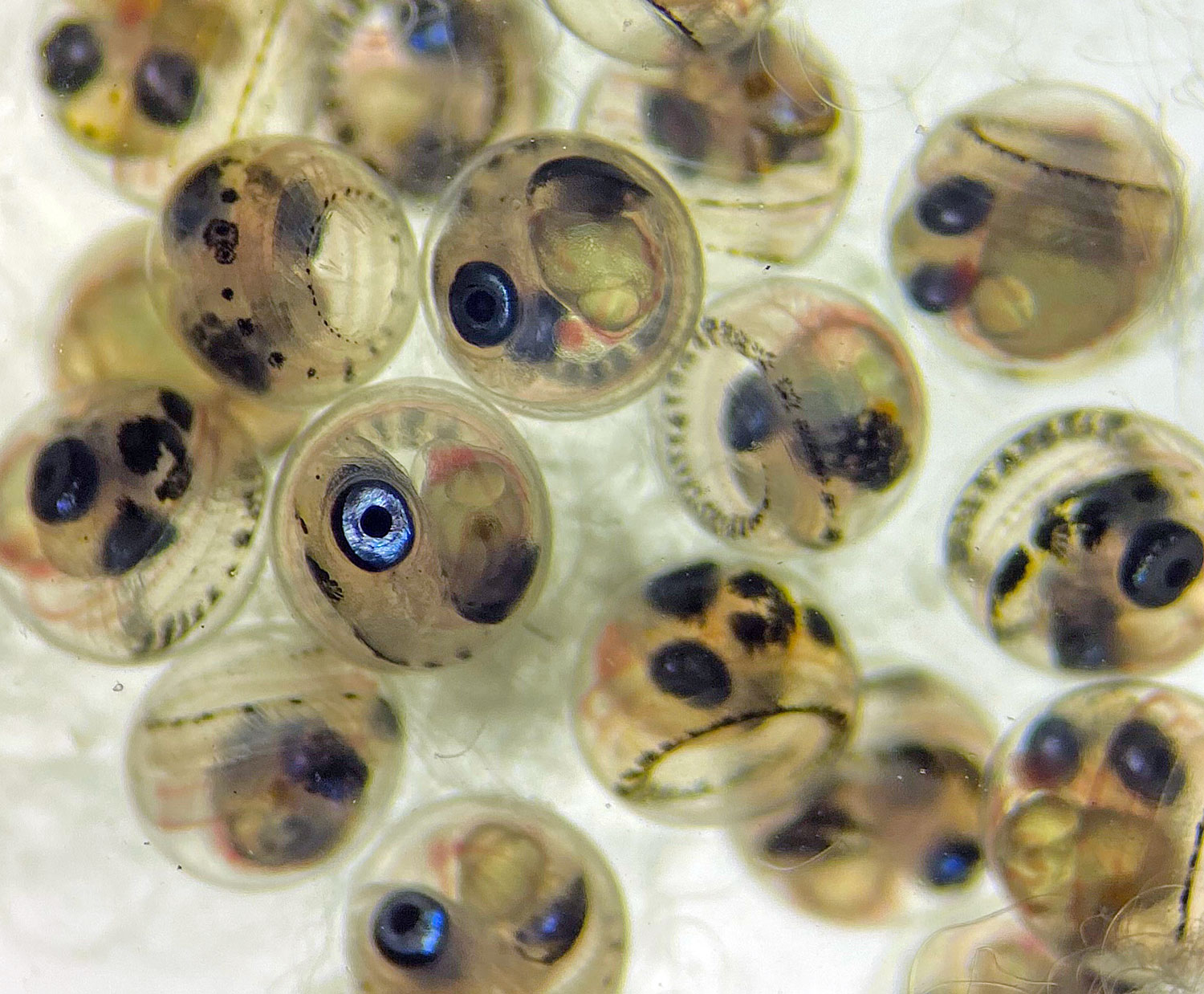
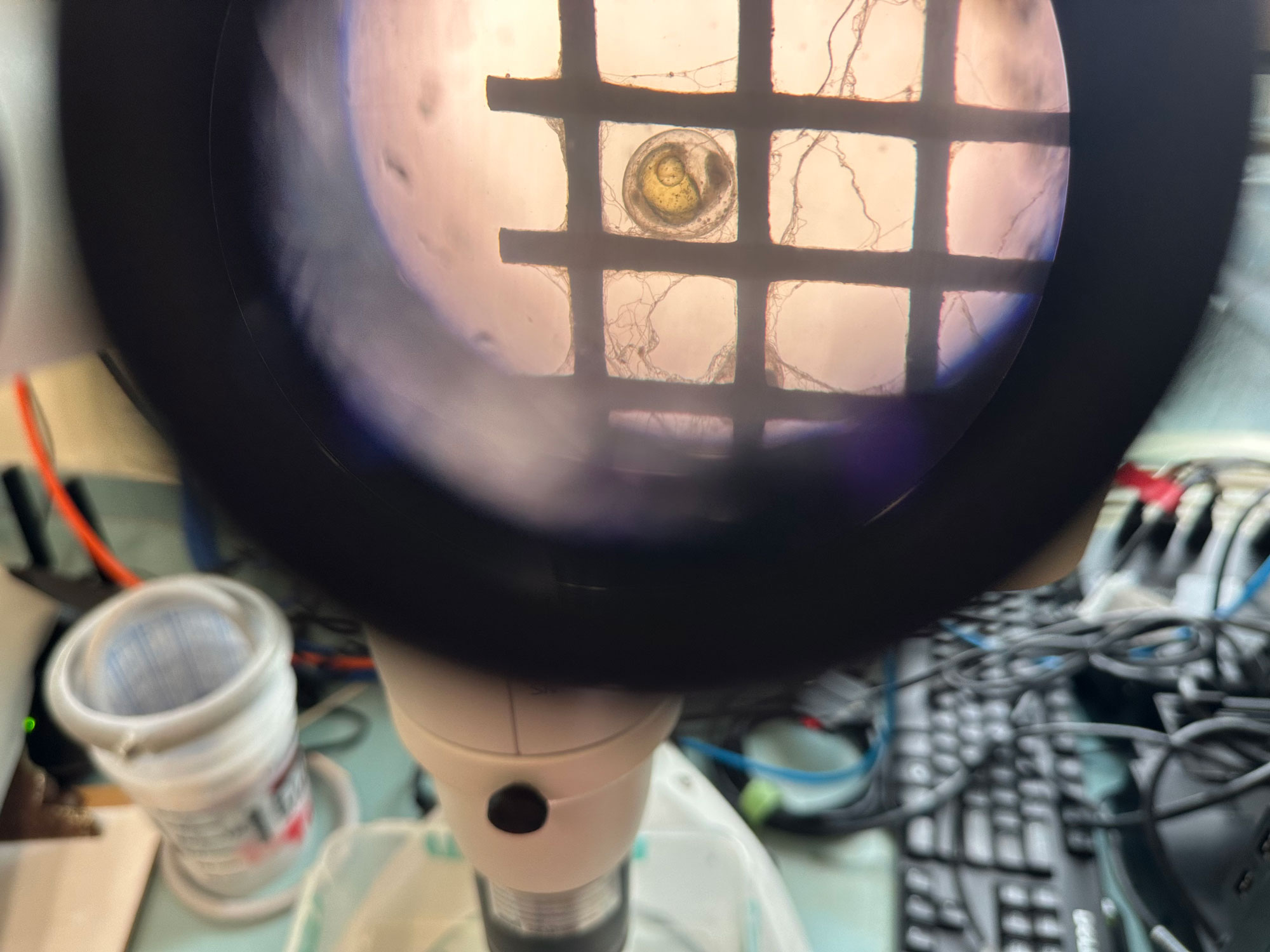
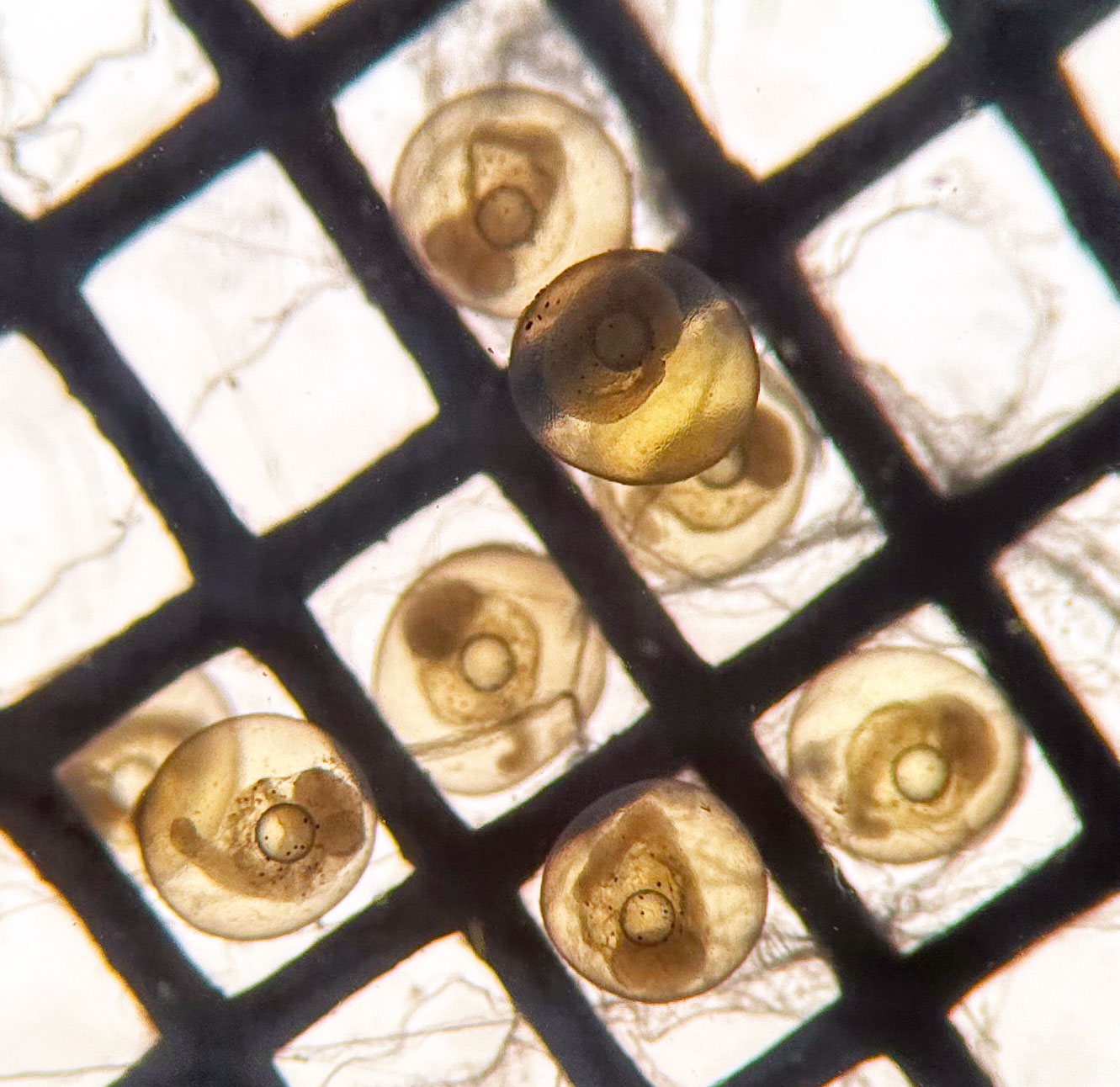
The time to show you the data will come later, the time to show some pictures is now. The analysis, which turns numbers into patterns, which then may lead to new insights has only just begun. One thing, however, is already clear from these data; silverside embryos are surprisingly heat stress tolerant. Exposures of up to 4h to 27-34C produced no measurable increase in mortality.
But that's not the whole story. There is more to come.
For now, join me again in a big show of hands for the whole team and the many helping hands!