By Gabe Redmond
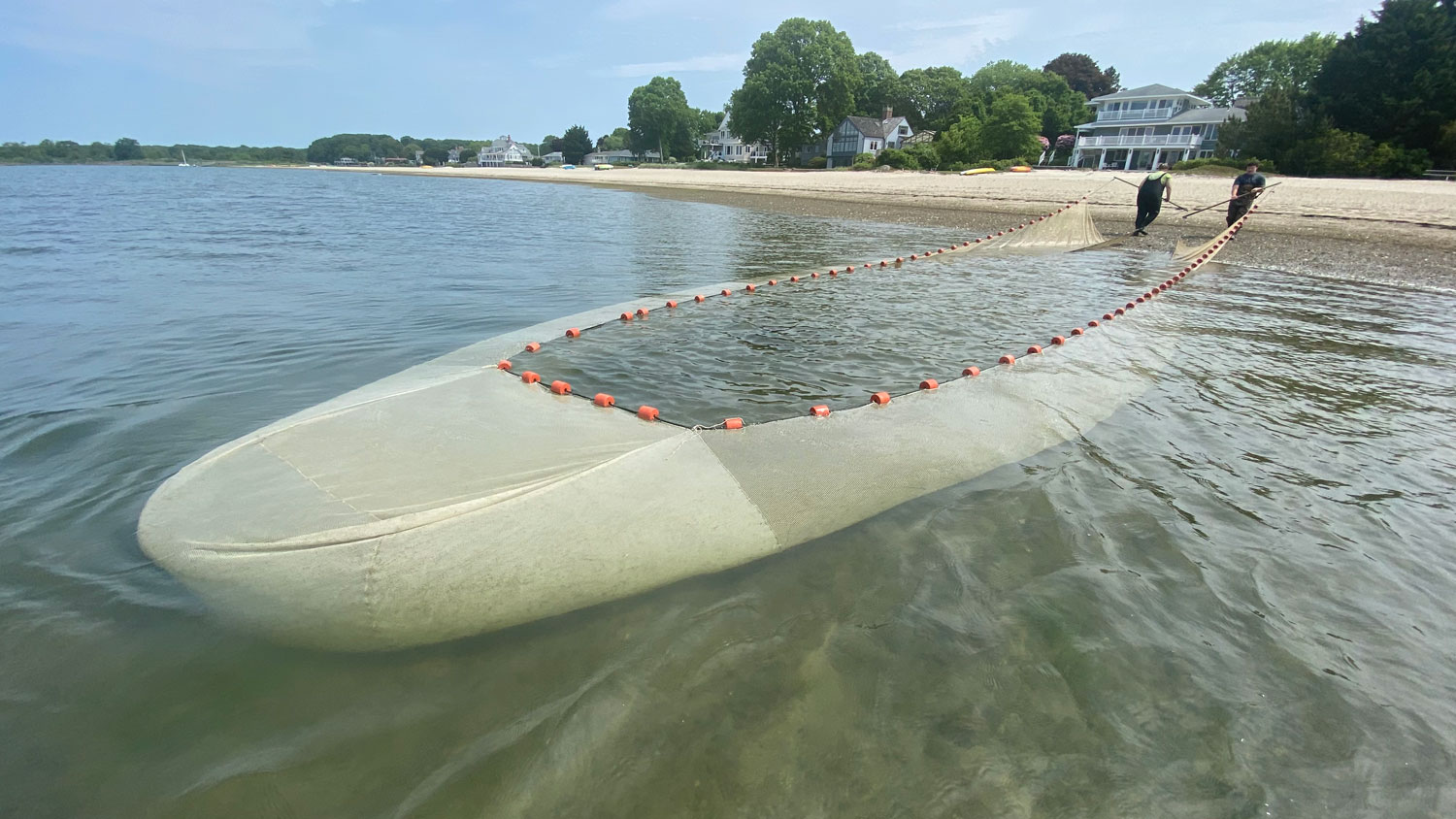
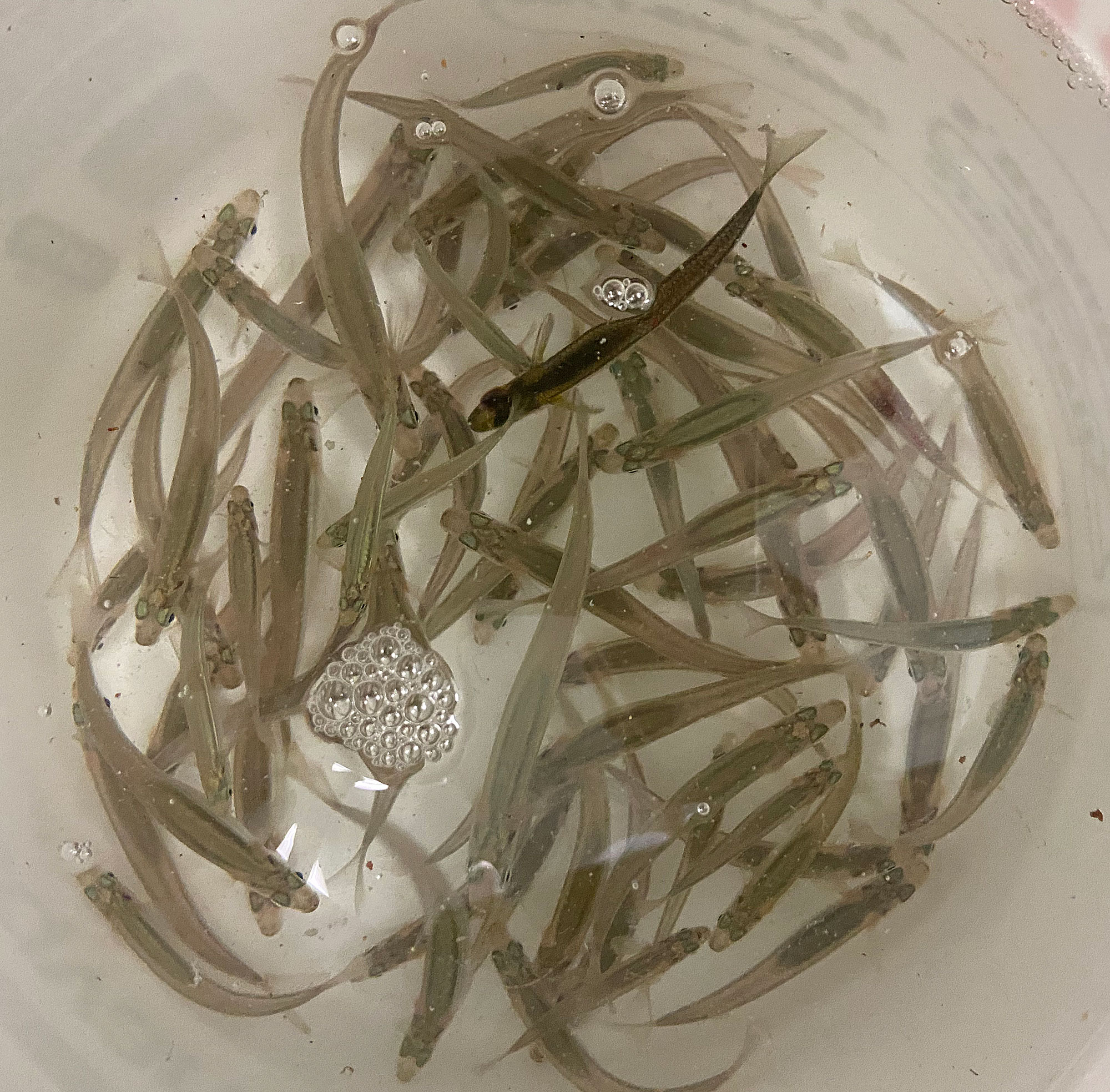
My experience over the course of this project and my time at this REU was incredible. Getting hands-on in fieldwork was a dream come true. I loved to work with creatures like the Atlantic Silversides, gain so much knowledge about them, how they grow, and how important they are to the ecosystem.
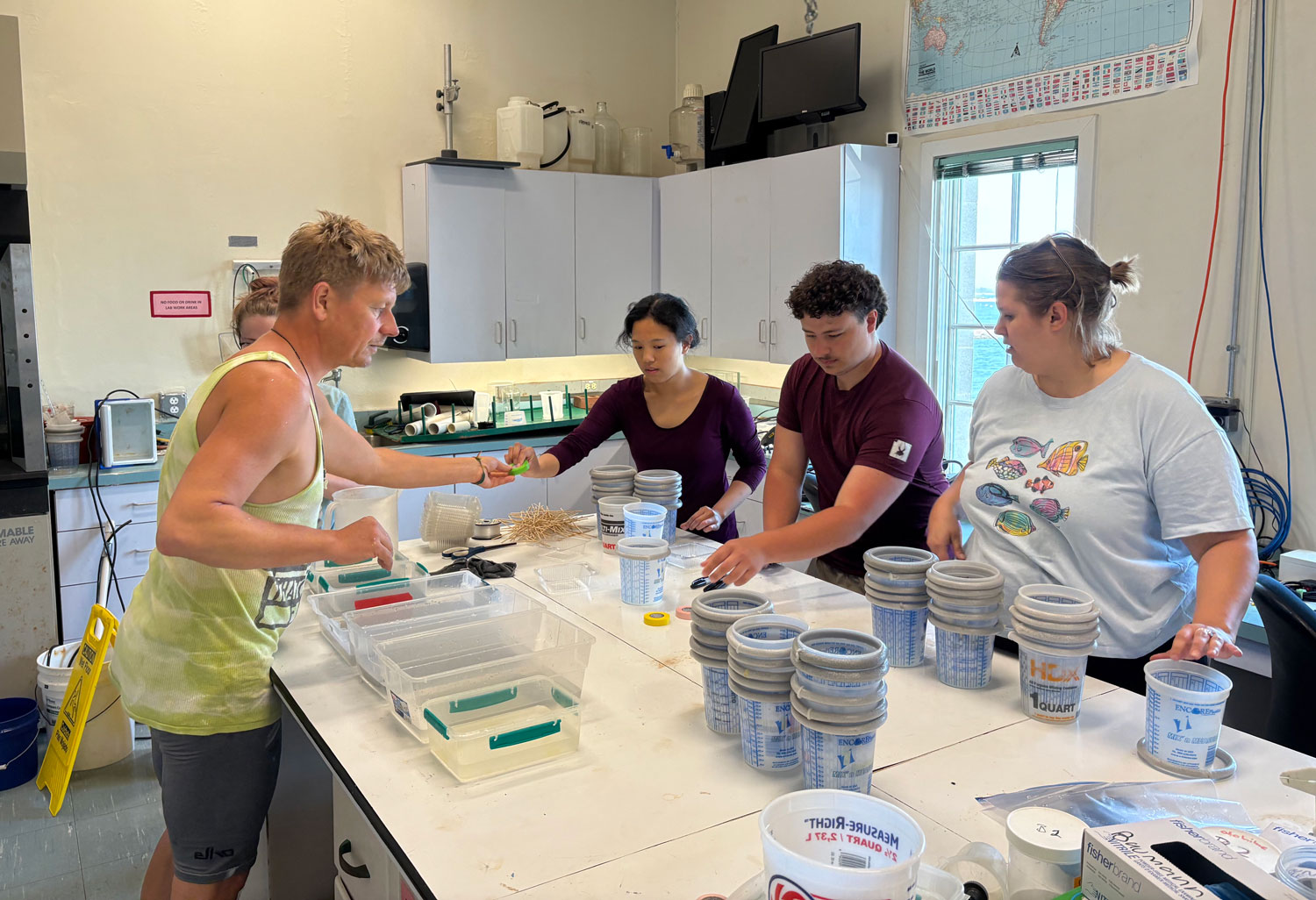
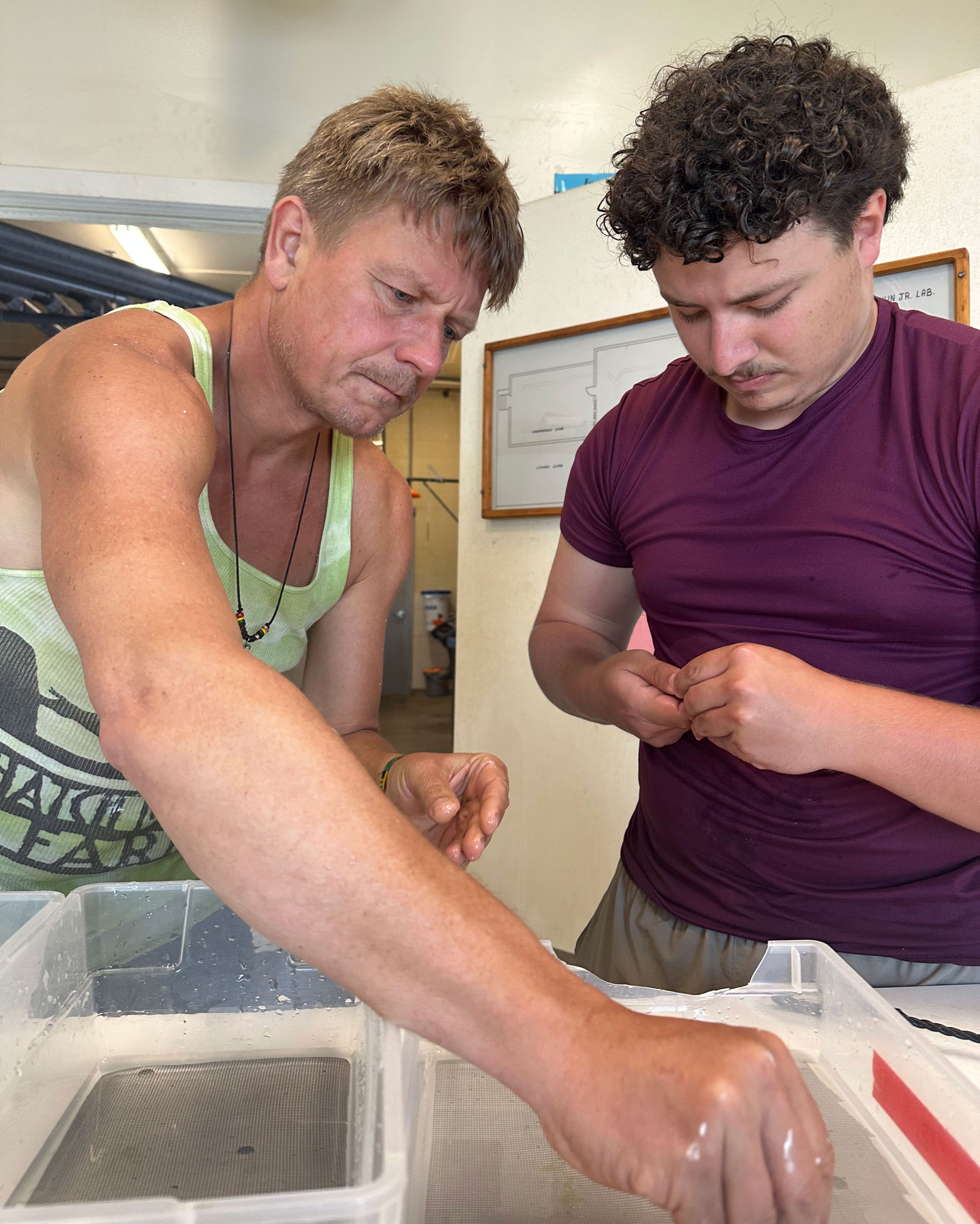
Doing the project was really cool and very fun. Getting to understand each step of the process until we reached our final goal was very cool and interesting. I really enjoyed being around a big group of people who were also intrigued and excited about what we were going to find. I had an amazing mentor who stood by constantly helping me and working right alongside me, and teaching me all the neat tips and tricks to everything, something I will never forget.
I got to meet so many incredible people and personalities, and being able to see the excitement, the concentration, and so much more is something that can’t be put into words. It’s this feeling that is so extravagant, having such a great group of people that I would consider friends was such an incredible honor to have worked alongside them. If any of them ever asked me to come back up and help any time during the future, I would come back and work with or for any of them.
I could not have asked for a better experience and I am very happy that I get to bring so much knowledge with me towards my future goals and all the friends and contacts with me as well.
NSF-REU
NSF-REU experiment reveals surprising heat tolerance of silverside embryos



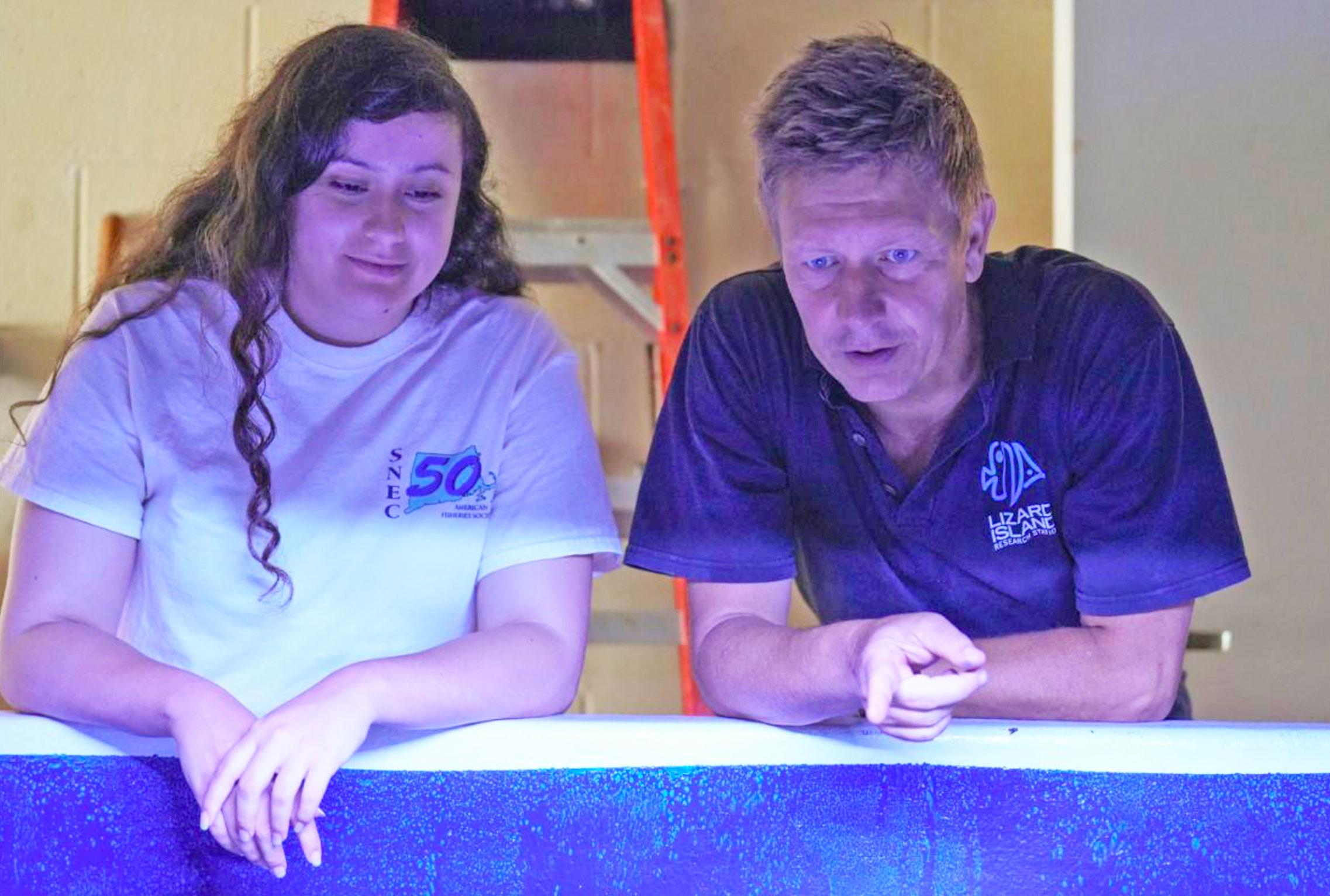
NSF-REU student Elizabeth Estrada had a busy summer
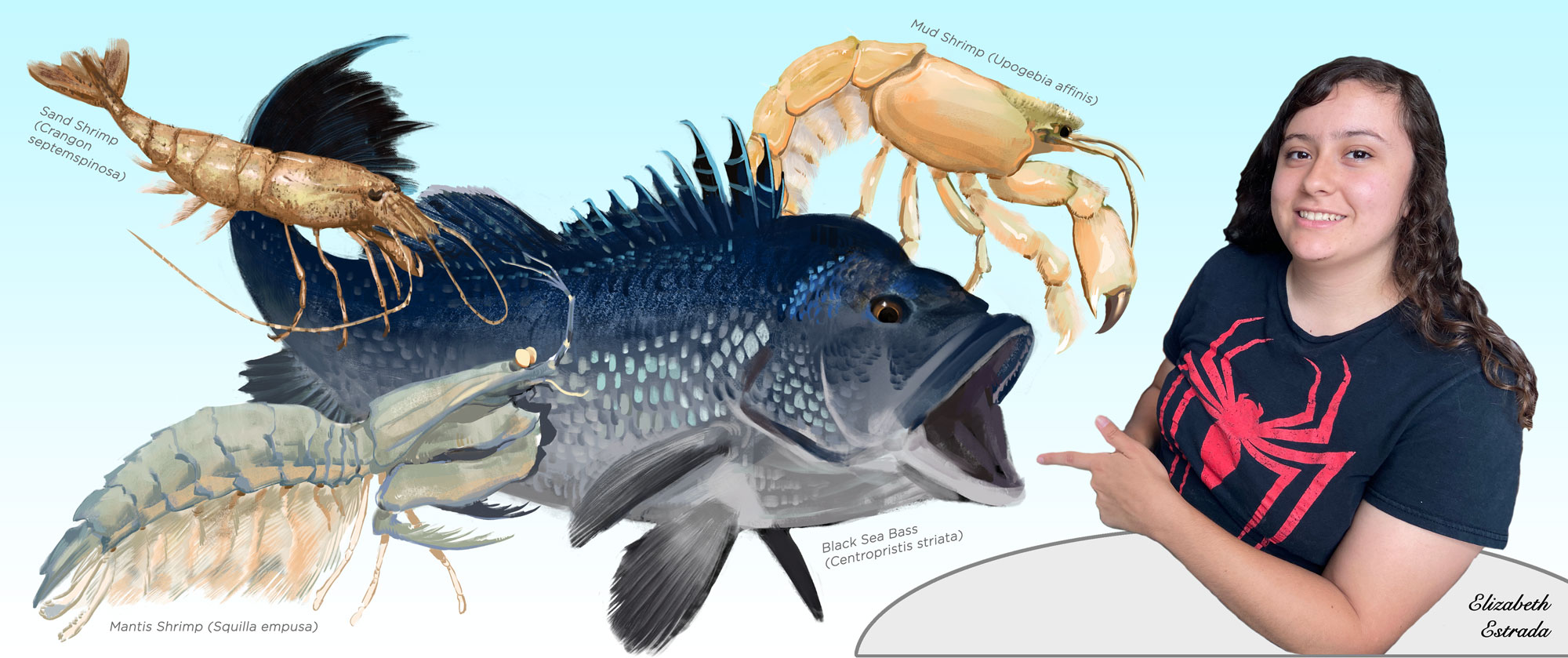
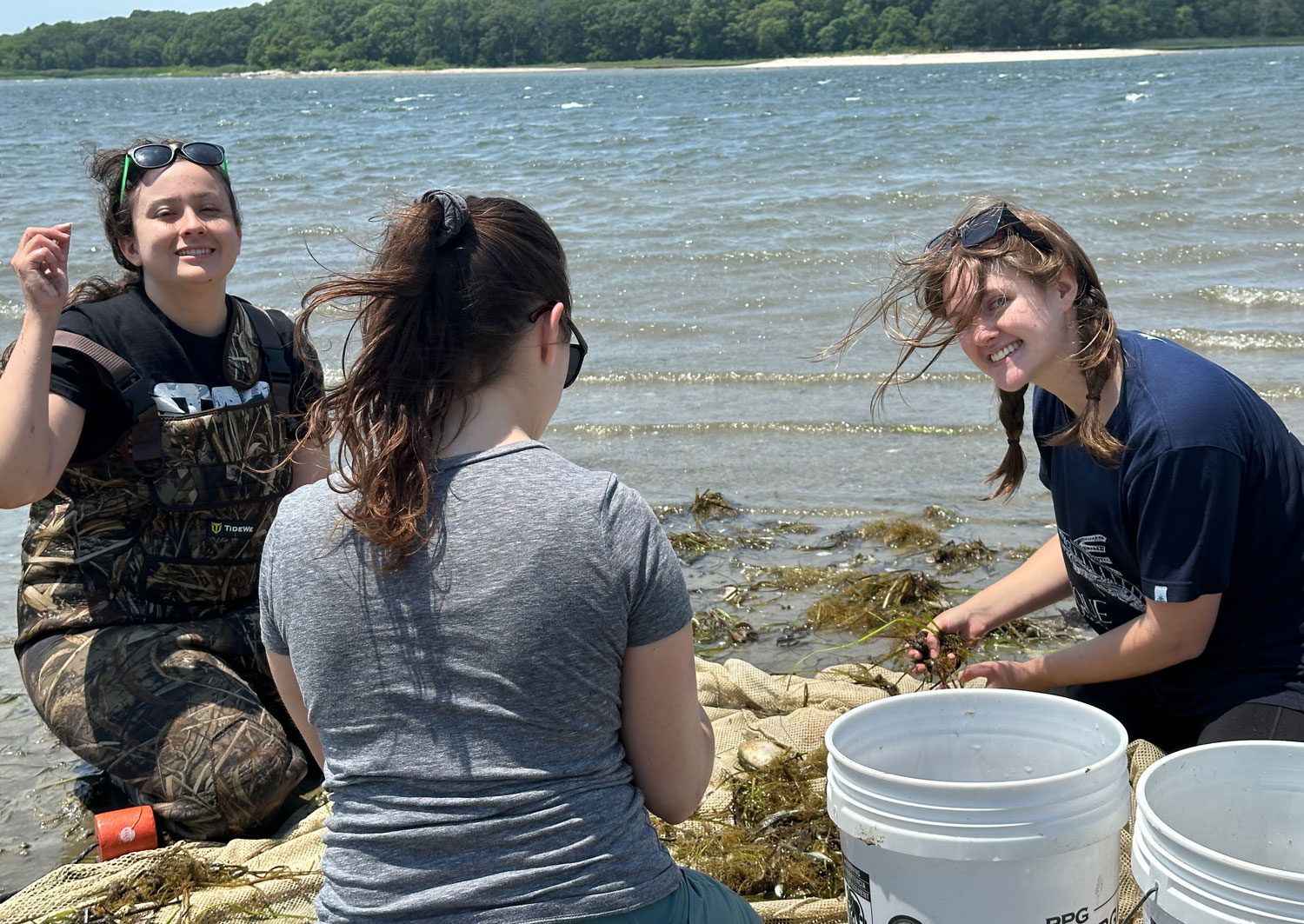
8 August 2025. For 10 weeks in summer 2025, Elizabeth Estrada, a rising junior at Riverside City College in Riverside, CA, joined our lab to experience fish ecology research. She applied herself to two contemporary topics - (a) the morphometric relationships between Black sea bass predators and their crustacean prey and (b) the diurnal behavior of juvenile American sandlance in captivity. Ever curious, Elizabeth learned what motivates this research, contributed valuable data and observations, and shadowed other graduate students to observe molecular techniques.
And Elizabeth's artistic talents in drawing animals will leave a truly lasting legacy at our lab!
Thank you so much for your hard work, curiosity and inspiration, Elizabeth! The whole Baumann lab wishes you all the best for the future!
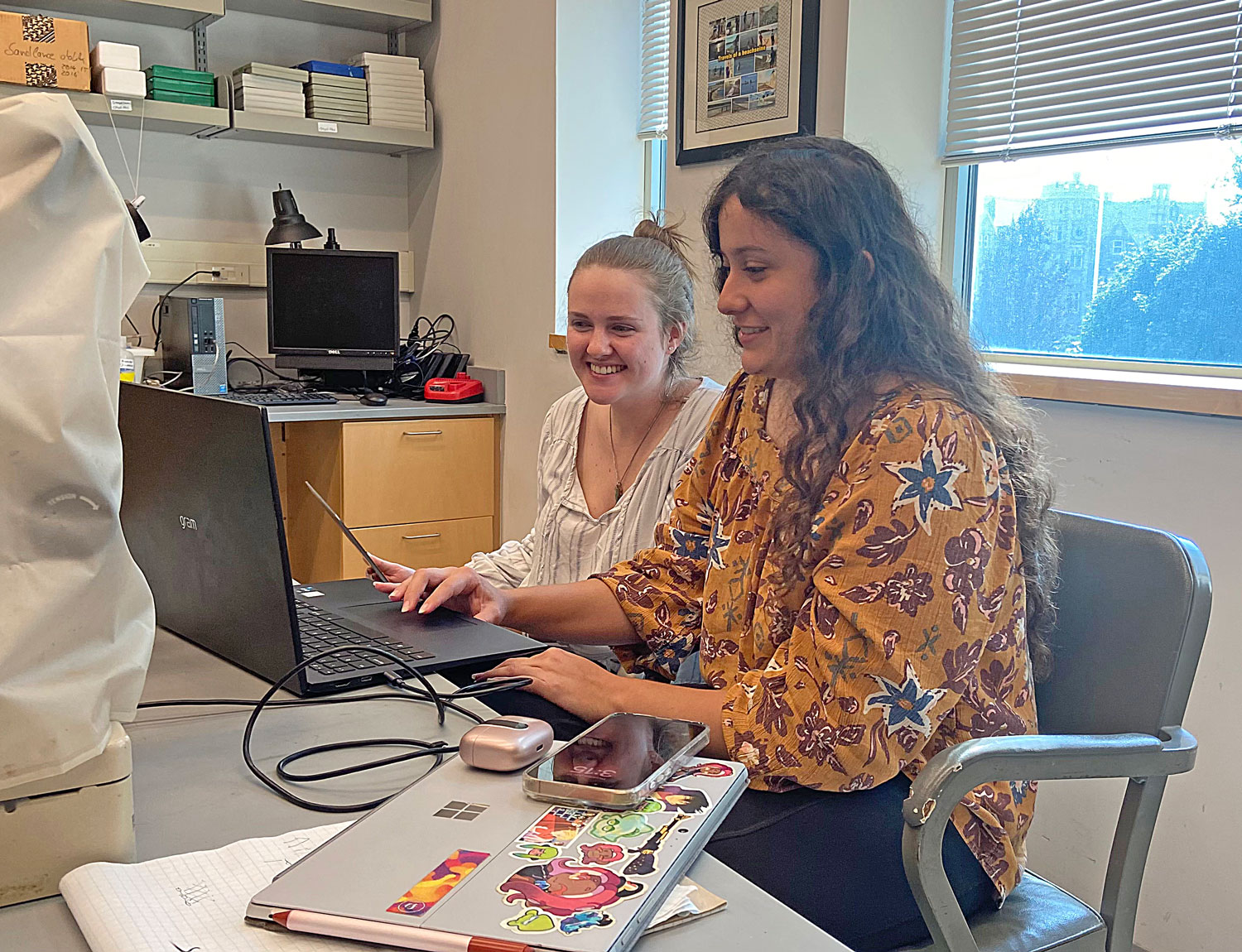
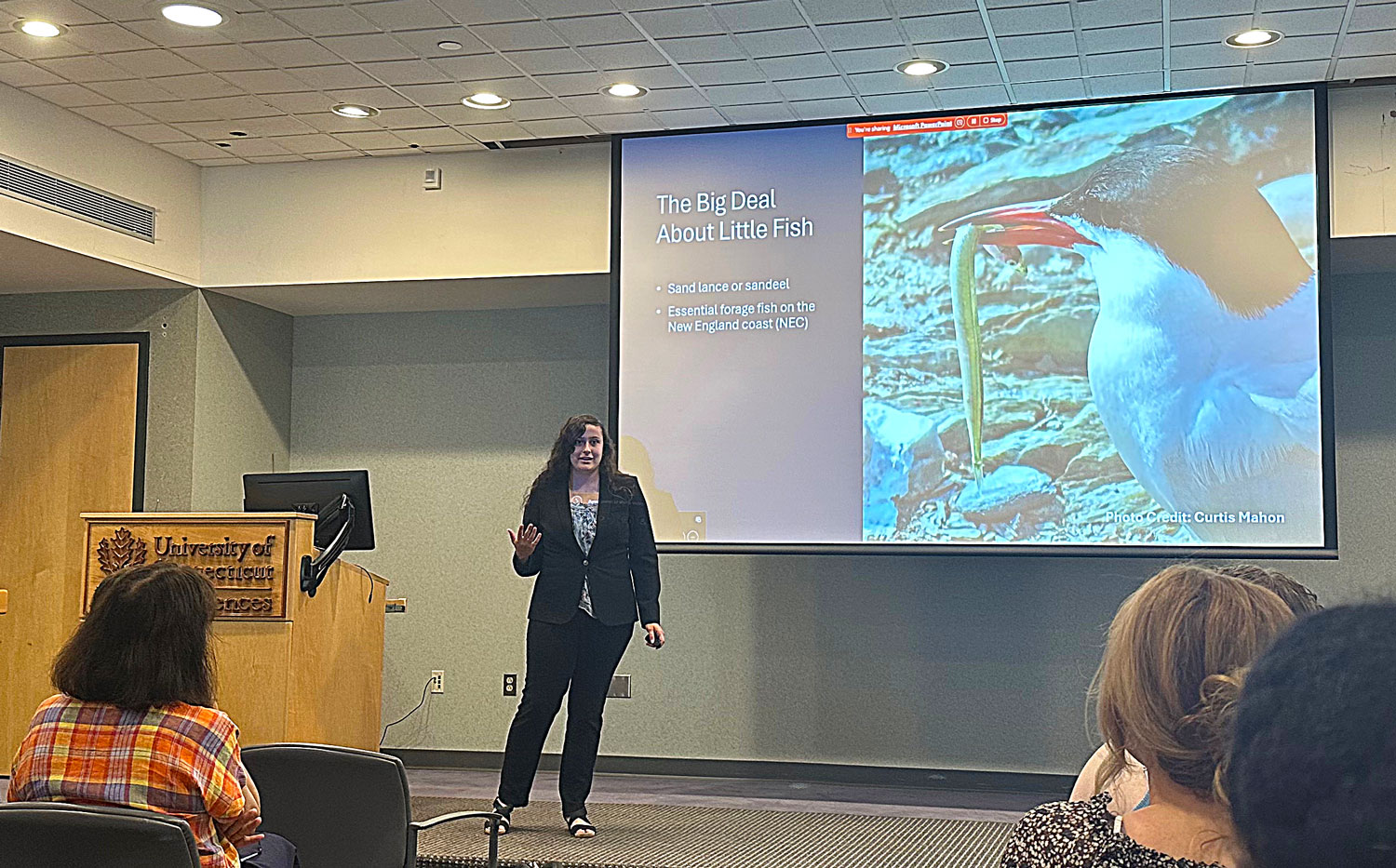
Elizabeth summarized her summer research findings during one poster and one oral presentation.
- Estrada, E., Siegfried, E., and Baumann, H. 2025. Diurnal Burying Behavior of Ammodytes spp. REU final colloquium, Avery Point 6 August 2025
- Estrada, E., Roby, H., and Baumann, H. 2025. Breaking it down: do bigger fish eat bigger shrimp? REU outreach event to the broader public at Mystic Aquarium. 22 July 2025
You can reach Elizabeth at eestrada75@student.rccd.edu
[Lab news] Deanna Elliott completes her NSF-REU project
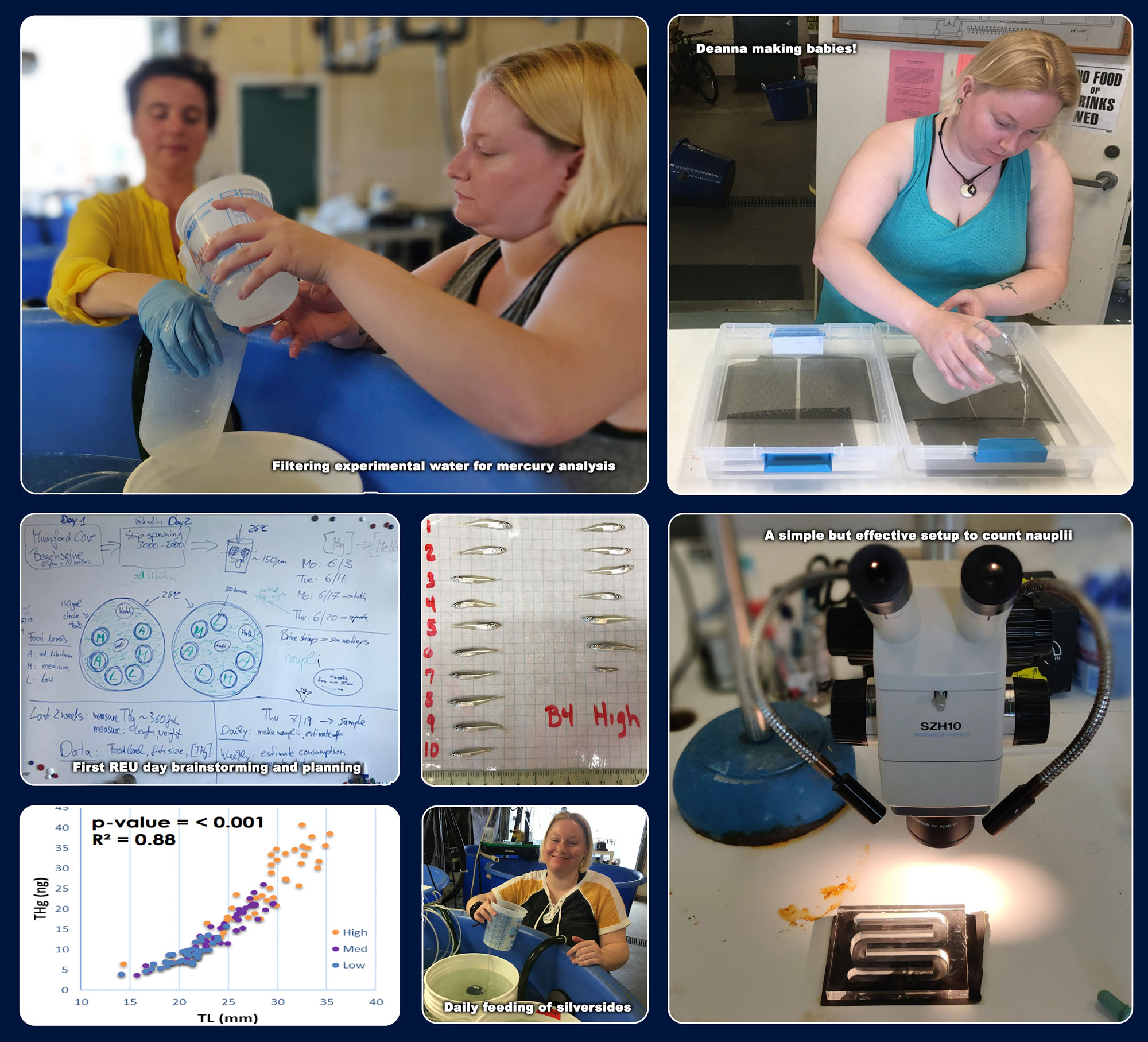
10 August 2019. Deanna Elliott from Arizona State University has just successfully completed her summer research project as our third NSF-REU student. For her REU-project she reared Atlantic silverside larvae under different feeding regimes to create fish of different body sizes and then analyzed them for trace levels of mercury in their tissue. She tested the hypothesis that mercury concentrations in fish can be used as a proxy for ingestion rates, which are important to trophic ecosystem models to perform better.
Here’s what Deanna had to say about her REU research experience:
This summer, I spent 10 weeks in the Baumann Evolutionary Fish Ecology lab and had a blast! The entire lab was incredibly welcoming, and made me feel at home immediately. We jumped right into my project and I had so many new experiences, it was almost overwhelming. We went seining for silversides in Mumford Cove, fertilized fish eggs… I became a Fish Mommy for the first time, rearing approximately 500 juvenile silversides for five weeks—I had never even had a fish tank before! I also got valuable experience in the chemistry lab, analyzing the mercury content of my Fish Babies. I felt very welcomed and received a lot of encouragement on my project and the presentation I had to give at the end of the program. Hannes and Zosia especially made me feel appreciated and supported, and that made all the difference in my experience with UCONN’s marine biology REU.
Check out some of the impressions from Deanna’s time at UConn. Great job, Deanna!
[Lab news] Video of Mumford Cove probe swap
14 June 2018. Members of the Baumann and Mason lab went on a trip to Mumford Cove, today, and Chris Tsang went along with his GoPro. Thanks to Charlie, the skipper, the ride was smooth and a pleasure, a swapping our pH, Temperature, oxygen, and salinity sensor was successfully swapped with a new one recording for the next weeks in 30 minute intervals. Wes Hoffman from the Mason lab, collected zooplankton with a Bongo-net. Sydney Stark, our NSF-REU student this summer, came along just for the fun.
See the fun for yourself!