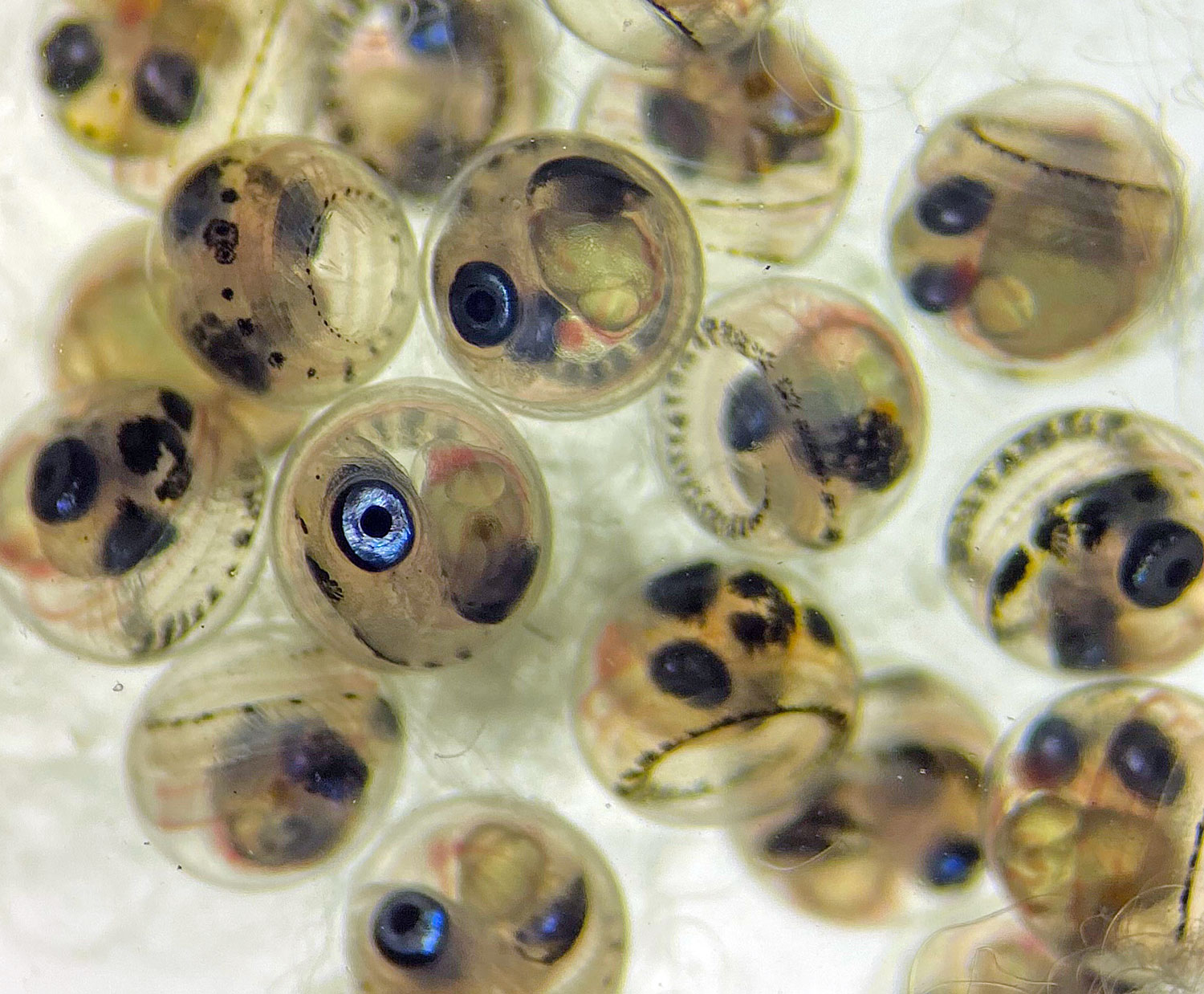
26 July 2026. We are excited to share the great news that Ecology & Evolution just published the first findings from our experimental research on Chilean silversides! The paper describes in detail the rationale, experimental procedures, results and implications of our work in 2023 and 2025 - showing the patterns and statistical tests to support the central claim that the sea silverside Odontesthes regia is now the first documented case of countergradient growth adaptation in a southern hemisphere fish species.
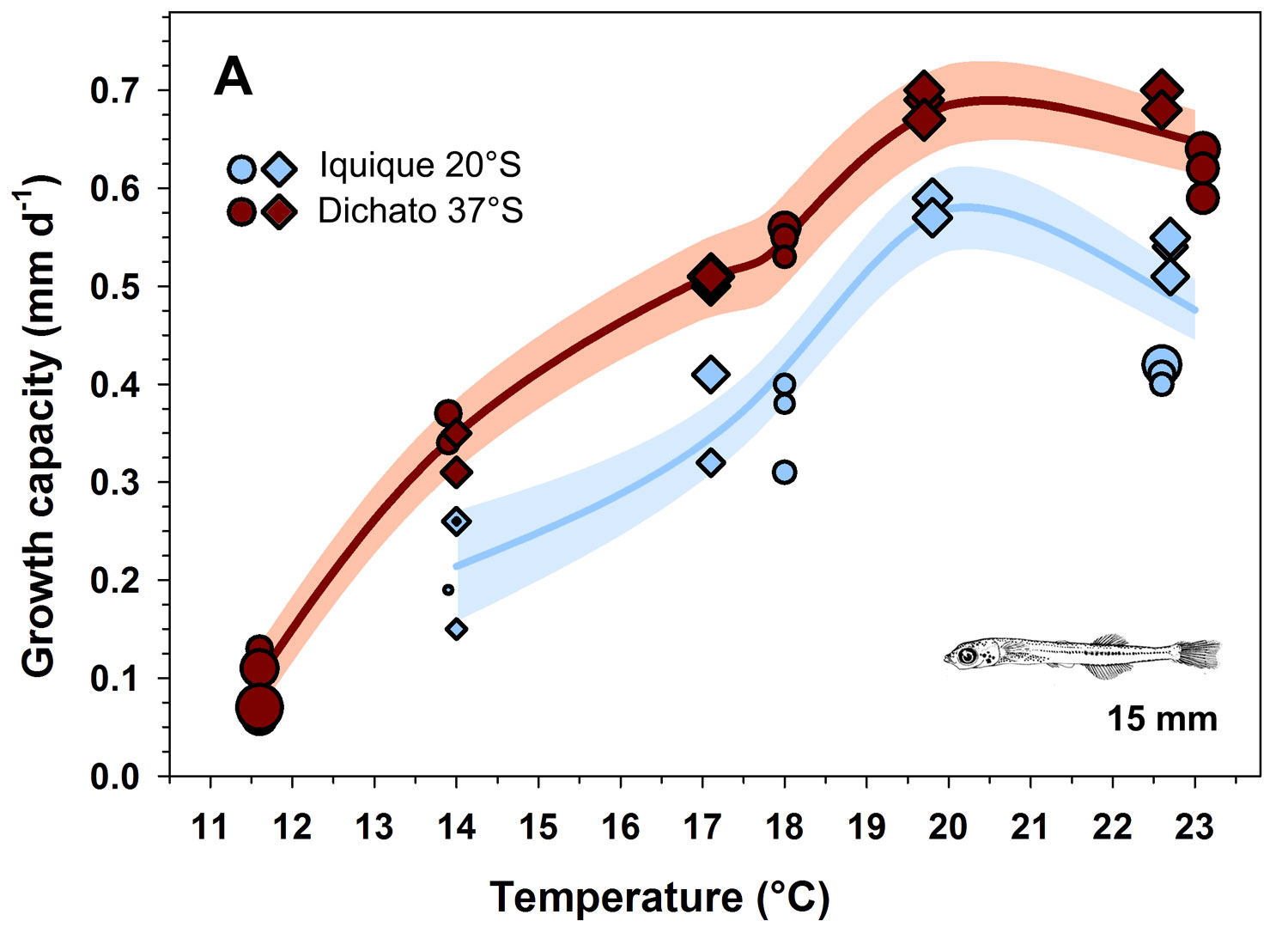
After returning from Chile with samples and data in December 2025, and then combining those with the samples and data from 2023 - it became readily obvious that larvae from the more northern, lower latitude population (Iquique, 20S) grew significantly slower across all tested temperatures than their conspecifics from the more southern, higher latitude population (Dichato, 37S). This pattern of local adaptation is called countergradient variation - and it has previously only been shown in fishes from the northern hemisphere.
Since this form of climate adaptation appears to be so ubiquitous worldwide, it is therefore likely that it also applies to adaptation of organisms to climate change in time - which is an important and increasingly urgent question for mankind. Or as we write in a more technical synopsis of the study:
We performed common garden experiments on offspring of the sea silverside Odontesthes regia to characterize thermal growth reaction norms of different populations along the Chilean coast. This showed that the species exhibits local adaptation in the form of countergradient growth adaptation because higher-latitude southern populations grew faster at all tested temperatures than their conspecifics from lower-latitude northern populations. We also show that fish from northern populations have on average two fewer vertebrae than their southern conspecifics, which is a form of cogradient adaptation also known as Jordan's Rule in fishes.