Web cookies (also called HTTP cookies, browser cookies, or simply cookies) are small pieces of data that websites store on your device (computer, phone, etc.) through your web browser. They are used to remember information about you and your interactions with the site.
Purpose of Cookies:
Session Management:
Keeping you logged in
Remembering items in a shopping cart
Saving language or theme preferences
Personalization:
Tailoring content or ads based on your previous activity
Tracking & Analytics:
Monitoring browsing behavior for analytics or marketing purposes
Types of Cookies:
Session Cookies:
Temporary; deleted when you close your browser
Used for things like keeping you logged in during a single session
Persistent Cookies:
Stored on your device until they expire or are manually deleted
Used for remembering login credentials, settings, etc.
First-Party Cookies:
Set by the website you're visiting directly
Third-Party Cookies:
Set by other domains (usually advertisers) embedded in the website
Commonly used for tracking across multiple sites
Authentication cookies are a special type of web cookie used to identify and verify a user after they log in to a website or web application.
What They Do:
Once you log in to a site, the server creates an authentication cookie and sends it to your browser. This cookie:
Proves to the website that you're logged in
Prevents you from having to log in again on every page you visit
Can persist across sessions if you select "Remember me"
What's Inside an Authentication Cookie?
Typically, it contains:
A unique session ID (not your actual password)
Optional metadata (e.g., expiration time, security flags)
Analytics cookies are cookies used to collect data about how visitors interact with a website. Their primary purpose is to help website owners understand and improve user experience by analyzing things like:
How users navigate the site
Which pages are most/least visited
How long users stay on each page
What device, browser, or location the user is from
What They Track:
Some examples of data analytics cookies may collect:
Page views and time spent on pages
Click paths (how users move from page to page)
Bounce rate (users who leave without interacting)
User demographics (location, language, device)
Referring websites (how users arrived at the site)
Here’s how you can disable cookies in common browsers:
1. Google Chrome
Open Chrome and click the three vertical dots in the top-right corner.
Go to Settings > Privacy and security > Cookies and other site data.
Choose your preferred option:
Block all cookies (not recommended, can break most websites).
Block third-party cookies (can block ads and tracking cookies).
2. Mozilla Firefox
Open Firefox and click the three horizontal lines in the top-right corner.
Go to Settings > Privacy & Security.
Under the Enhanced Tracking Protection section, choose Strict to block most cookies or Custom to manually choose which cookies to block.
3. Safari
Open Safari and click Safari in the top-left corner of the screen.
Go to Preferences > Privacy.
Check Block all cookies to stop all cookies, or select options to block third-party cookies.
4. Microsoft Edge
Open Edge and click the three horizontal dots in the top-right corner.
Go to Settings > Privacy, search, and services > Cookies and site permissions.
Select your cookie settings from there, including blocking all cookies or blocking third-party cookies.
5. On Mobile (iOS/Android)
For Safari on iOS: Go to Settings > Safari > Privacy & Security > Block All Cookies.
For Chrome on Android: Open the app, tap the three dots, go to Settings > Privacy and security > Cookies.
Be Aware:
Disabling cookies can make your online experience more difficult. Some websites may not load properly, or you may be logged out frequently. Also, certain features may not work as expected.
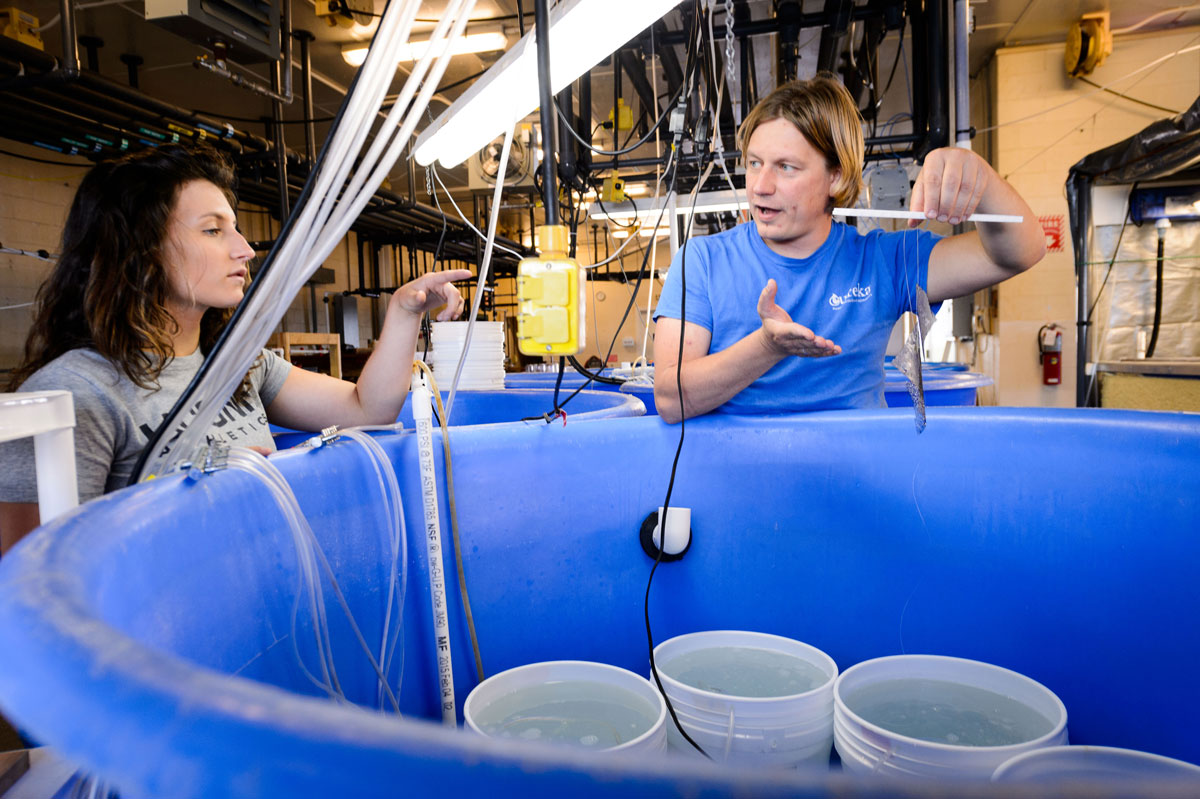
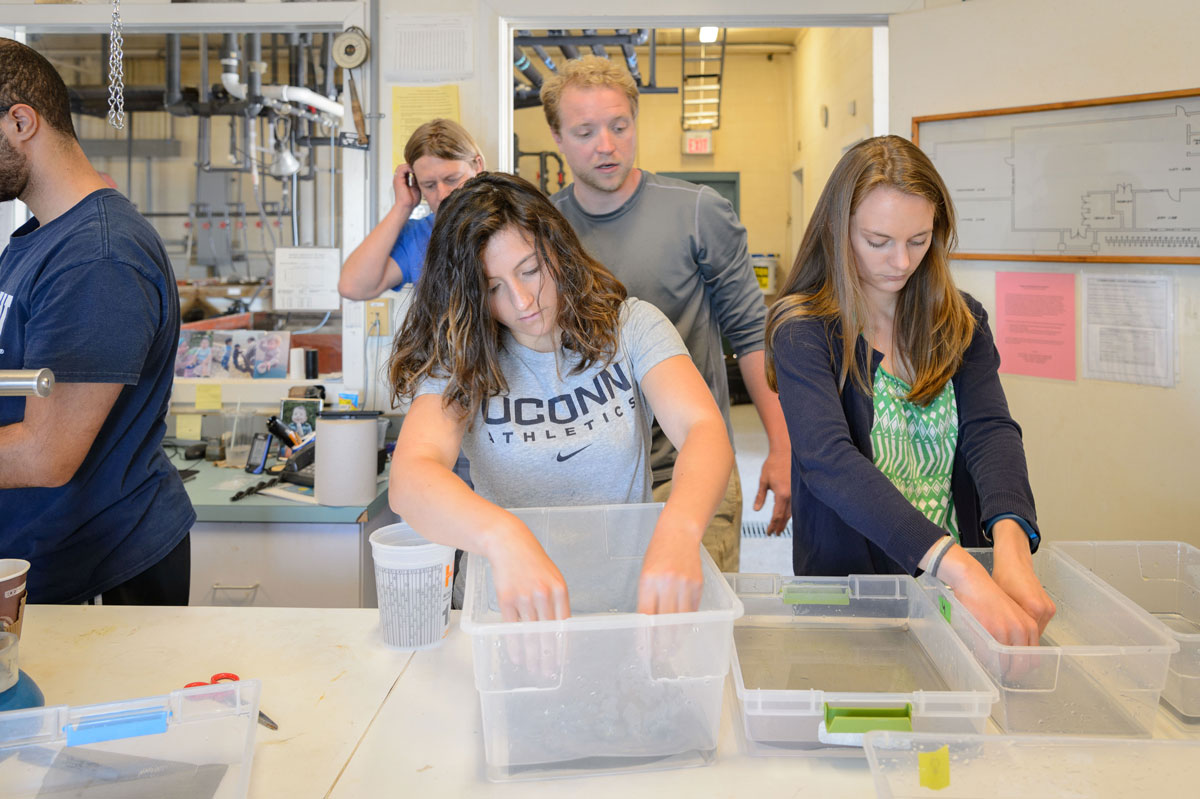
29 June 2018. A new experiment with Atlantic silversides (Menidia menidia) starts and as usual, it’s an all hand on deck operation. This time, we have Chris Tsang shadowing all of us and Emma professionally explaining the process.
14 June 2018. Members of the Baumann and Mason lab went on a trip to Mumford Cove, today, and Chris Tsang went along with his GoPro. Thanks to Charlie, the skipper, the ride was smooth and a pleasure, a swapping our pH, Temperature, oxygen, and salinity sensor was successfully swapped with a new one recording for the next weeks in 30 minute intervals. Wes Hoffman from the Mason lab, collected zooplankton with a Bongo-net. Sydney Stark, our NSF-REU student this summer, came along just for the fun.
Friday, 8 June 2018. Hannes and Maria traveled to Boston’s Harvard University to meet with Valentina di Santo from the Lauder Lab at the Museum for Comparative Zoology. Thanks to our collaborators there, we were able to use a 2D-digital X-ray machine there, which we needed to complete the next big step in our Menidia Gene project.
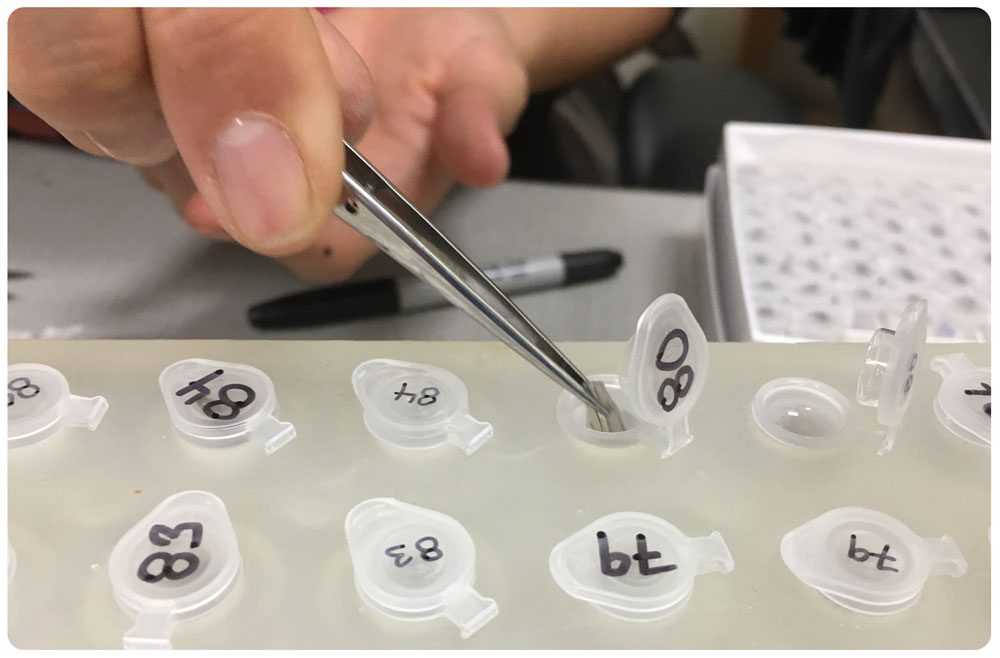
Genetic & body samples went in different vials
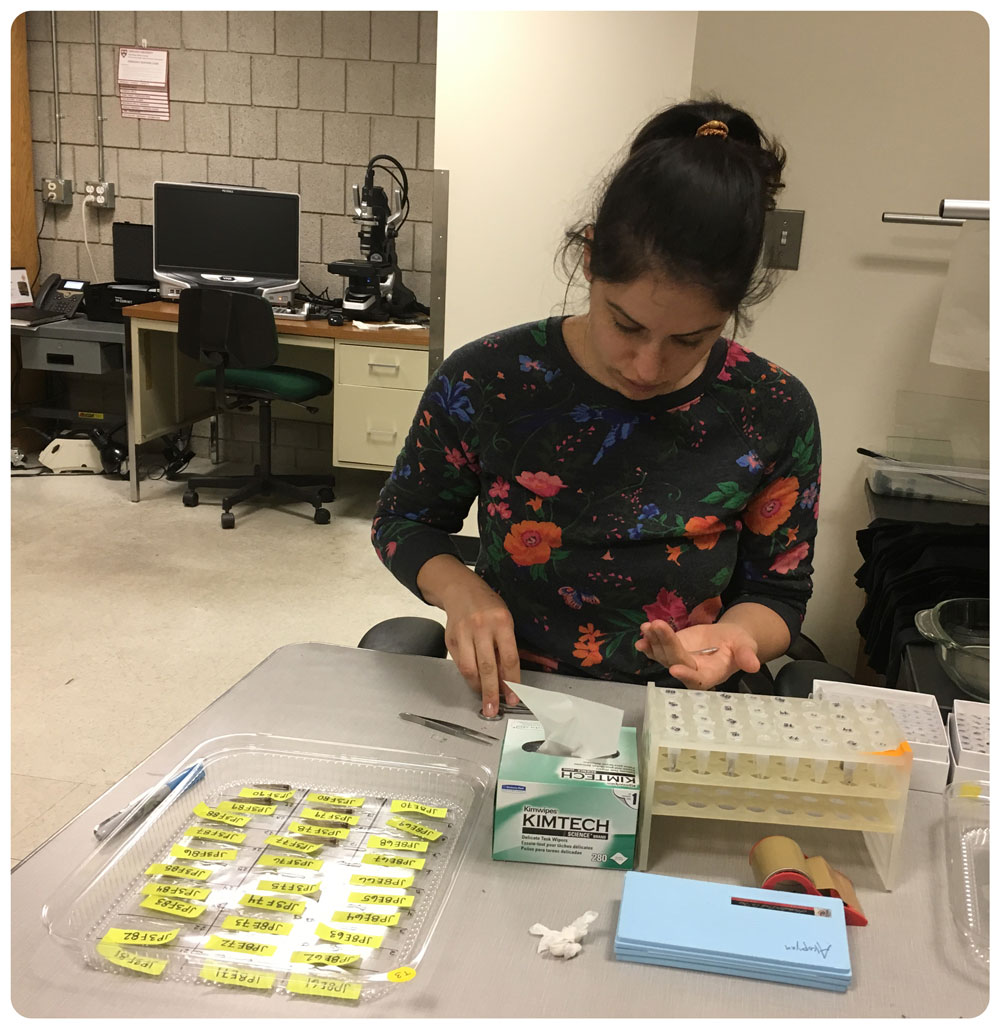
Maria Akopyan processing the fish after x-raying
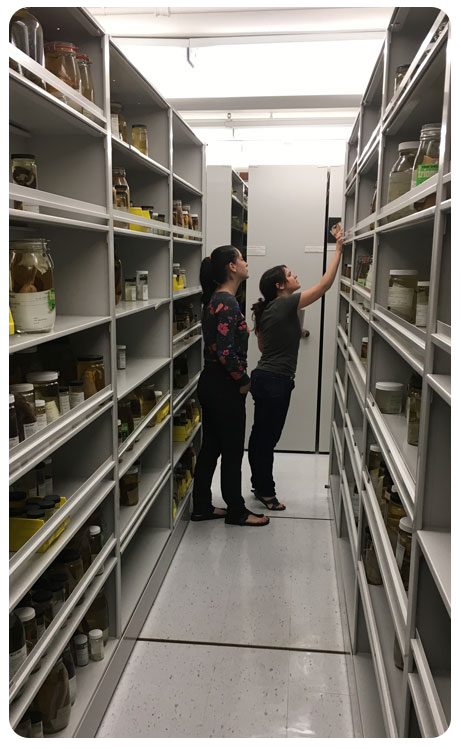
Maria and Valentina in the shark section of the collection
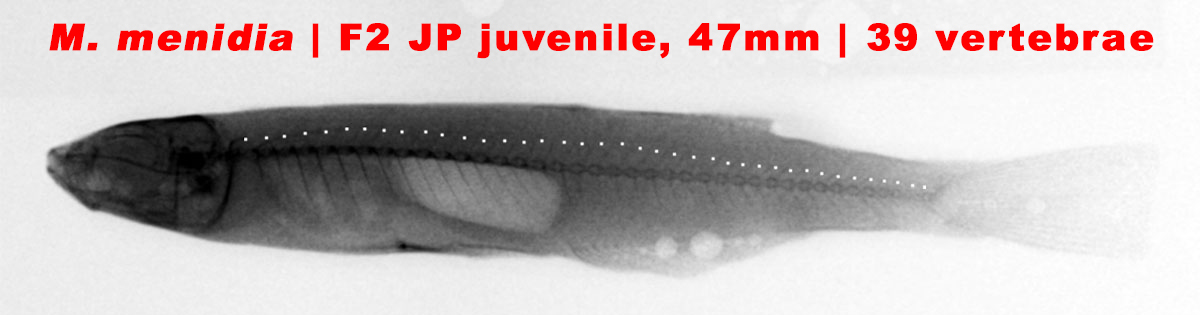
A few weeks ago, Maria had already measured each individual fish's length, weight, shape, routine metabolism, and maximum sustained swim speed. The next trait we're keen on mapping quantitatively to the silverside genome is the number of vertebrae, which we know increases in wild populations from south to north. What will our South/North hybrid F2 generation show?
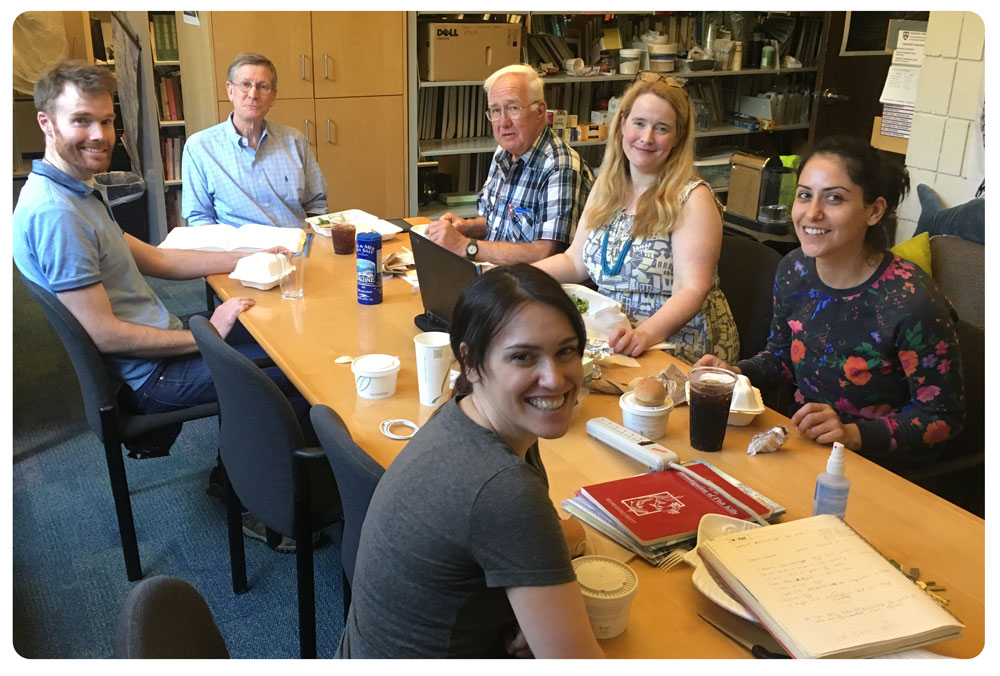
At the Lauder lab, ‘lunch together’ is common thing
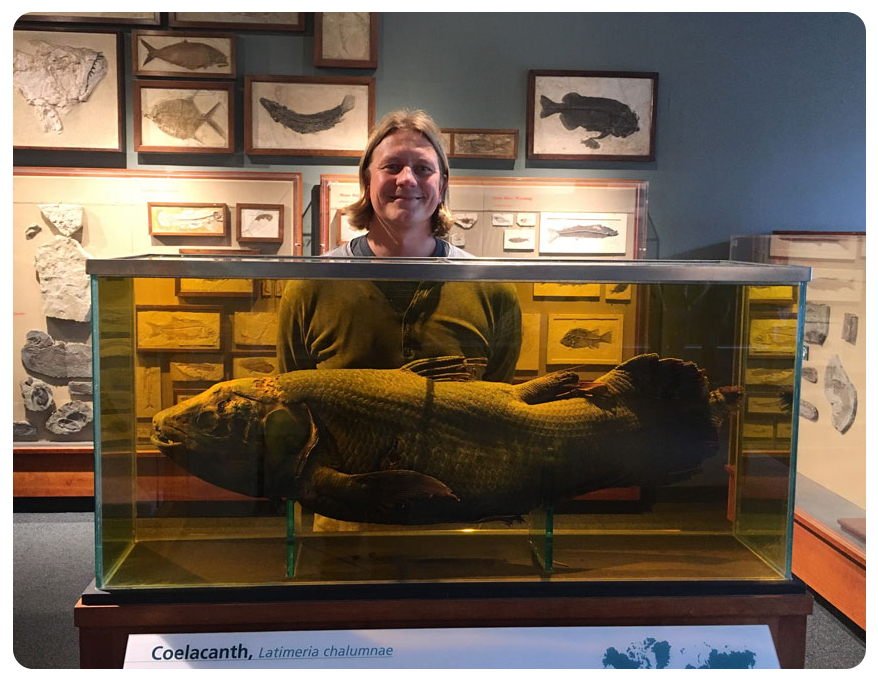
The famous Latimeria from the collection
Thanks to Valentina's excellent help, the work went without a hitch. At the end, we even had some spare time to enjoy the great atmosphere int the Lauder Lab during lunchtime, the tour through various lab installations, the experimental fish, and even the adjacent Harvard Zoological museum. Thank you all for the fun day at Harvard!
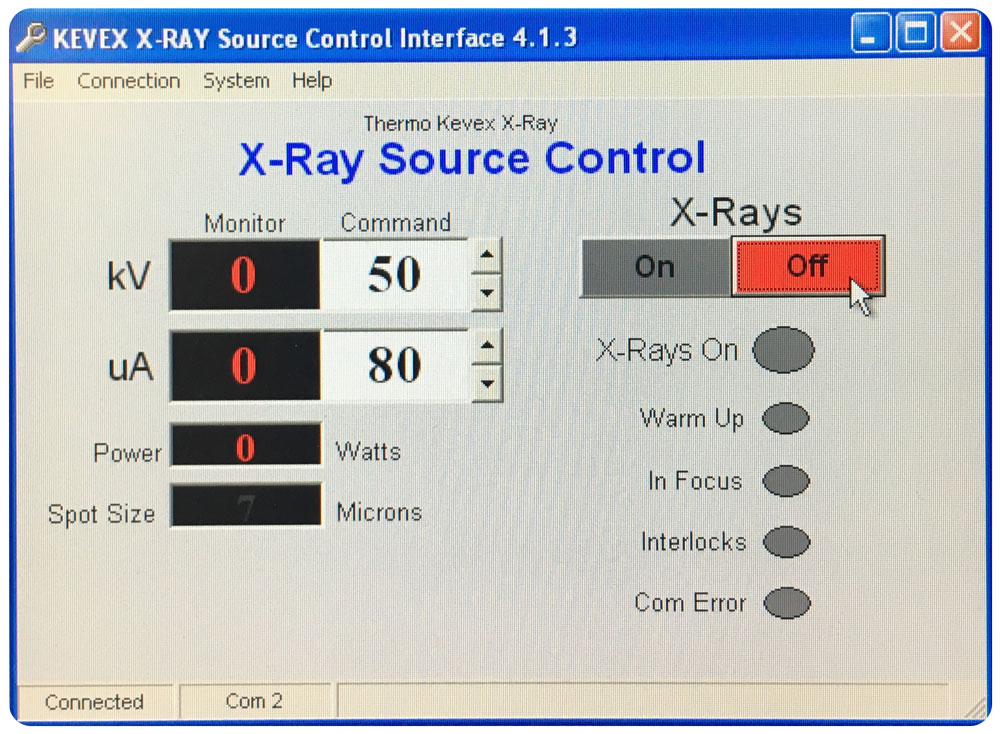
Settings used for x-raying juvenile silversides
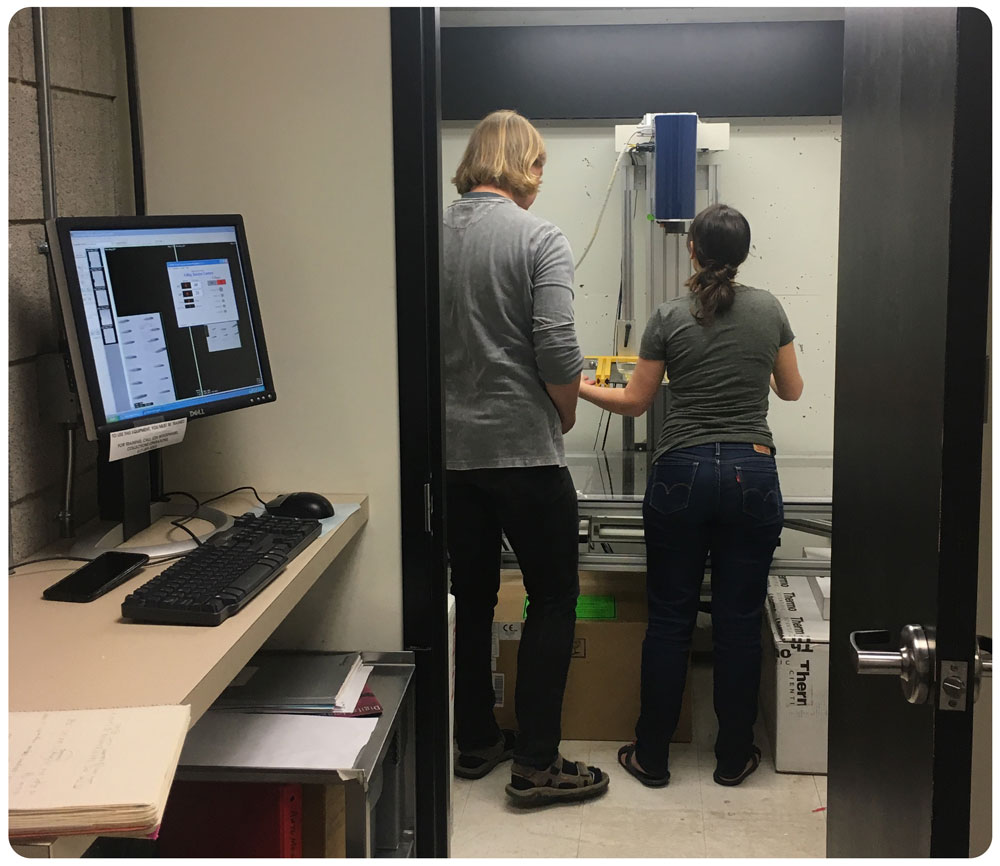
Hannes and Valentina in the x-ray room
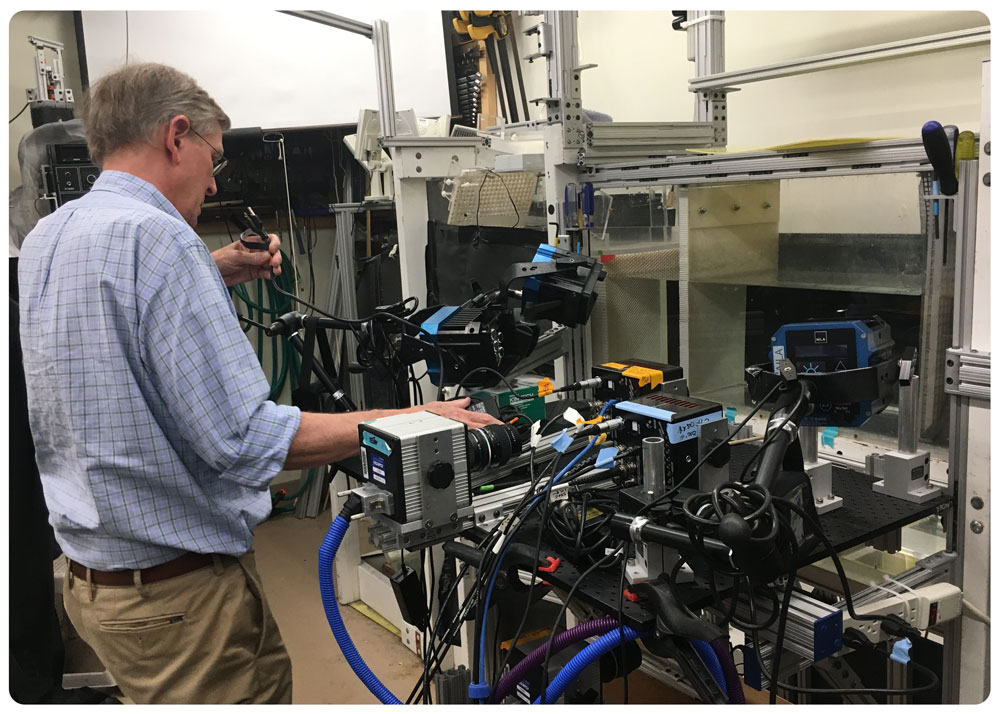
George Lauder adjusting equipment in the swim lab
The 282 fish are now split in a DNA sample for extraction and a body sample for further trait measurements.
On 18 May 2018, the Baumann lab teemed with activity. Maria Akopyan from Cornell University was busy phenotyping juvenile silversides for our Menidia Gene project. Mia and Mackenzie were busy working up field samples of silversides. And Hannes prepared adult silverside samples for later analyses.
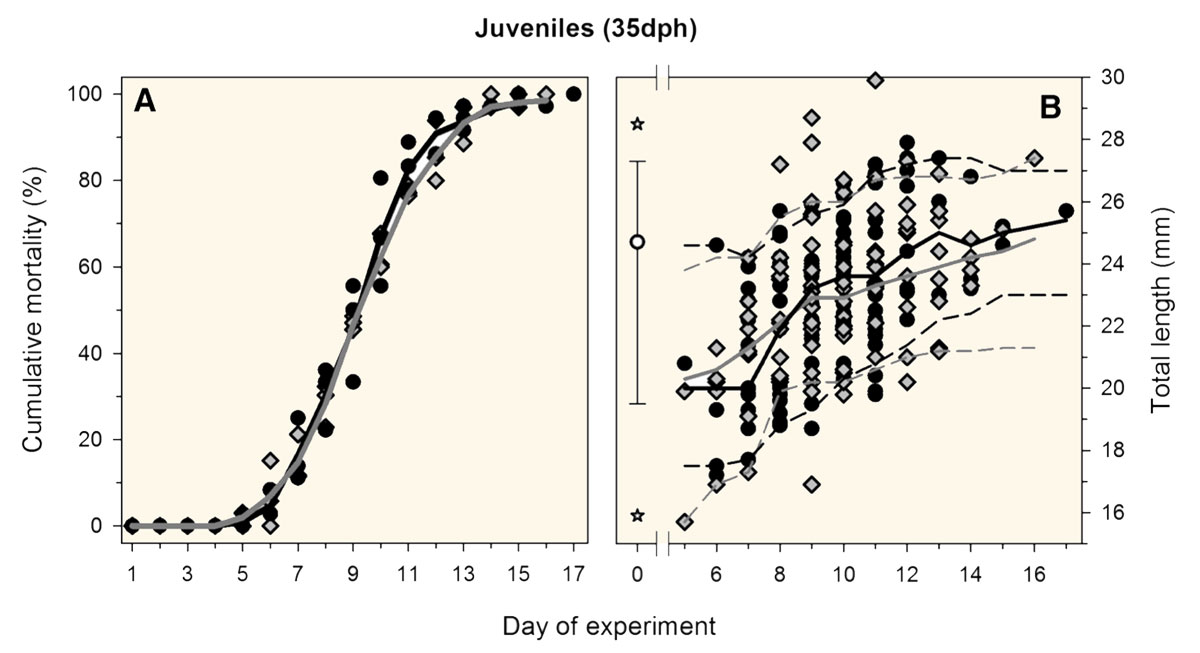
31 March 2018. We’re happy to announce that Marine Biology just published our latest study examining the starvation tolerance of silverside larvae and juveniles at contrasting CO2 conditions. We compiled observations from five separate experiments spanning different years, laboratories, temperatures, life stages, and CO2 levels. Contrary to expectation, we found that starvation rates were largely independent of the CO2 environment in this fish species.
One major set of data was produced by Elle Parks as part of her Research Experience for Undergraduates (NSF-REU) in summer 2017. Well done, everybody!
Baumann, H., Parks, E.M.*, and Murray, C.S.* (2018)
Hannes shows Elle Parks (REU 2017), how individual screen with enumerated embryos are suspended into the replicate rearing containers. (Photo: Peter Morenus, UConn)
On 9 June, Elle and Julie strip-spawn Atlantic silverside females into spawning dishes covered in window screen for eggs to attach. (Photo: Peter Morenus, UConn)
M. menidia. (A) Relative cumulative starvation mortalities of early juveniles reared under ambient (grey line, diamonds) vs. high CO2 conditions (black line, circles). Symbols depict individual replicates, lines represent treatment means. (B) Total length of juveniles perishing during the experiment at ambient (grey diamonds) vs. high CO2 conditions (black circles). Lines represent the median(solid lines), 5th and 95th percentiles (dashed lines) of TL estimated with locally weighted, non-parametric density estimators. The initial TL distribution at the beginning of the experiment is depicted on day 0 as the median (white circle), 5th/95th percentiles (whiskers) and the minimum and maximum (white stars).
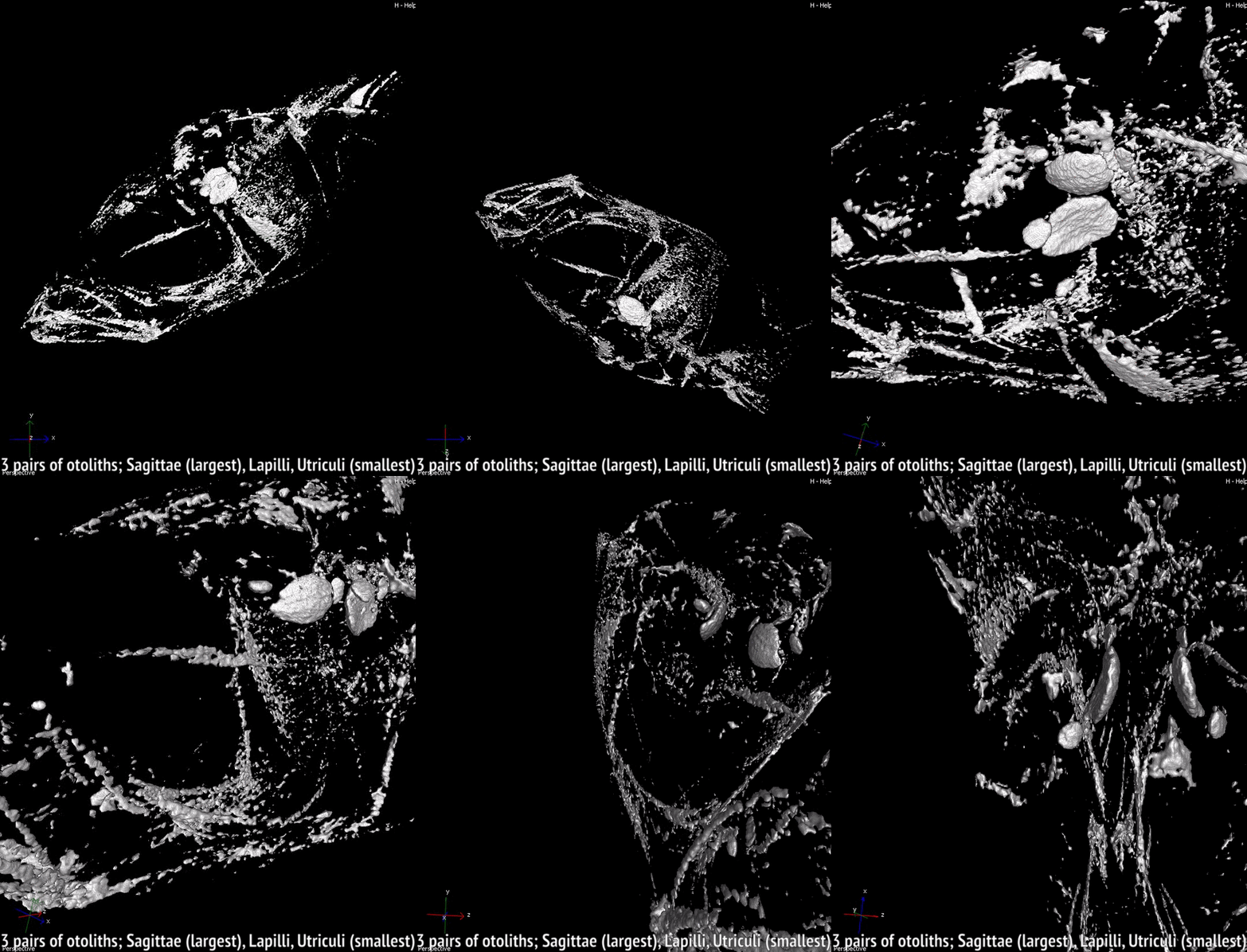
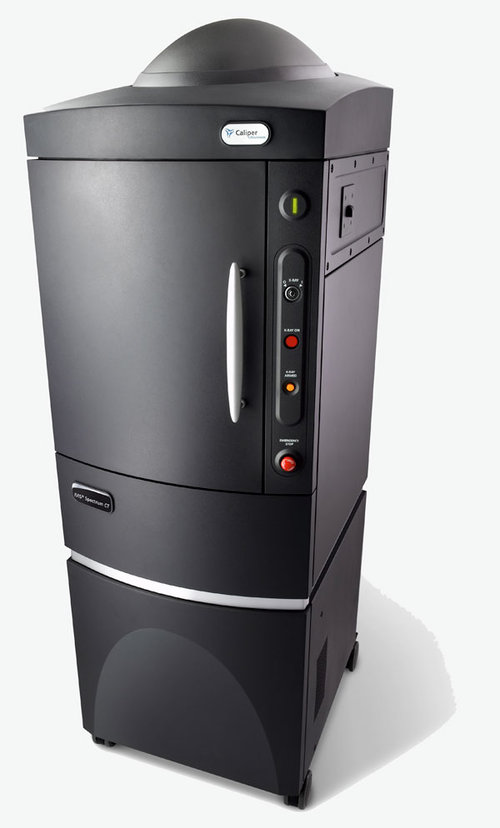
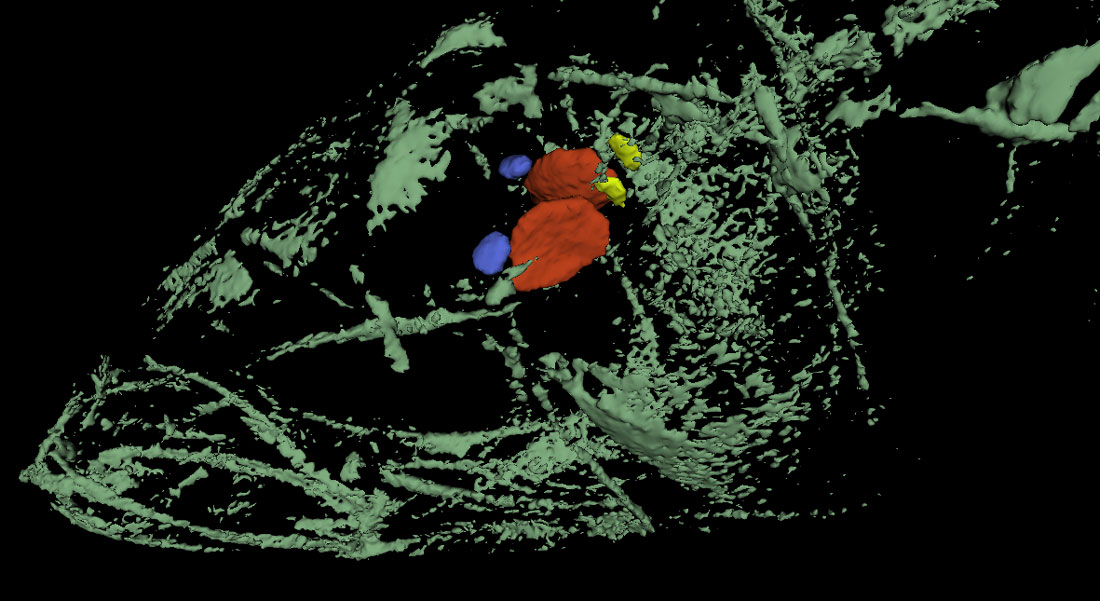
26 March 2018. Today we got our first glimpse of an incredible new way of imaging the inner calcified structures of a fish body, particularly the ear bones (otoliths), of which every teleost fish has six, three on each side inside the skull. Otoliths are long known to fish ecologists for their properties to record and store information about a fish’s age, growth and habitat. With an adult Atlantic silverside, Hannes visited John Shepherd, facilities scientist and member of the Goldhamer lab at UConn, Storrs (Biology Physics Building), who showed us the use of a new, state-of-the-art micro CT-scanner (IVIS). Turns out, the system effortlessly imaged all six otoliths inside of the fish’s head. Later in the year, we will use the technique to image silversides reared at contrasting CO2 conditions to see whether they differ in their otolith size, volume, and structure. Thank you, John, for this truly inspiring demonstration!
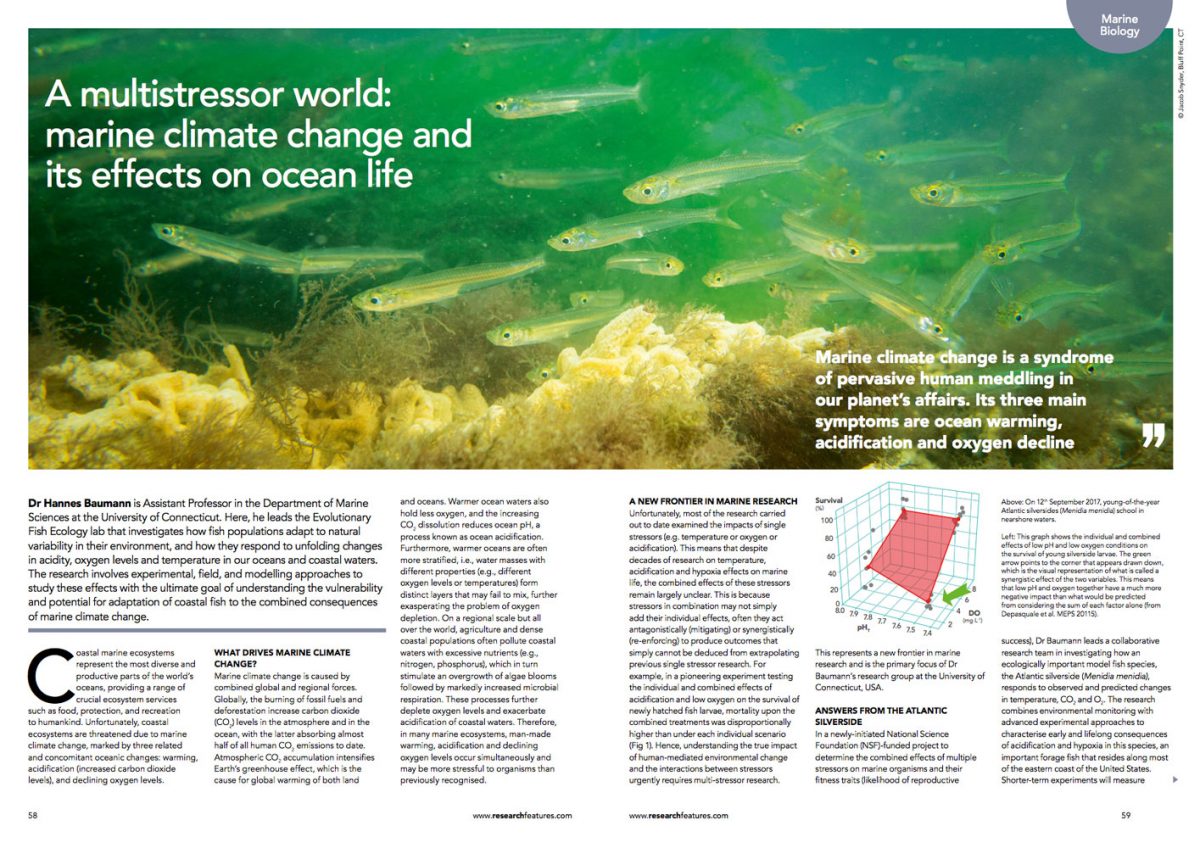
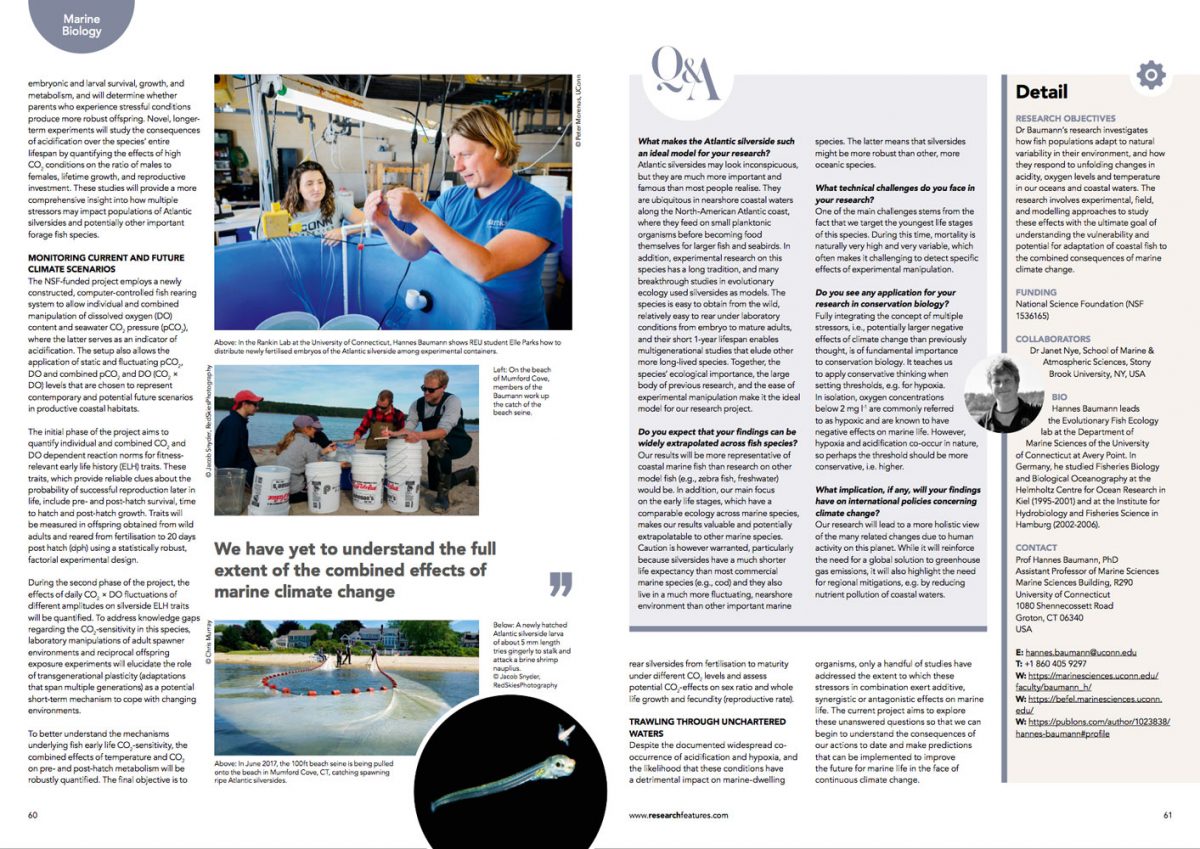
This research feature makes the case for multistressor research to a broad general audience and introduces our NSF project and its participants. Download the feature by clicking on the pictures or the link below.
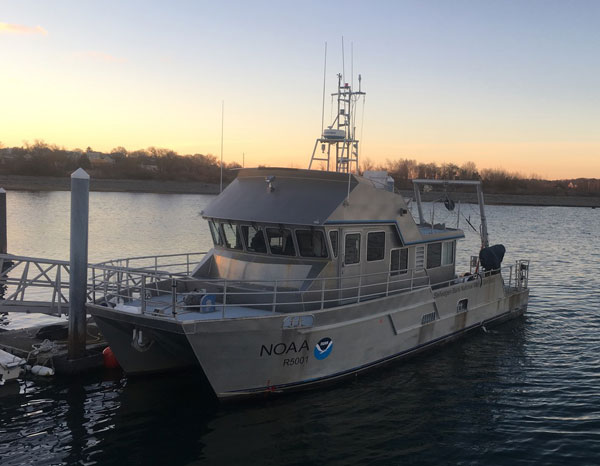
On this dimly lit November afternoon, rain mercilessly drenched scientists and crew on board the R/V Auk as it slowly navigated the waters of Stellwagen Bank. A world like a wet sponge. Sky and ocean, indistinguishable.
Thanksgiving, the next day.
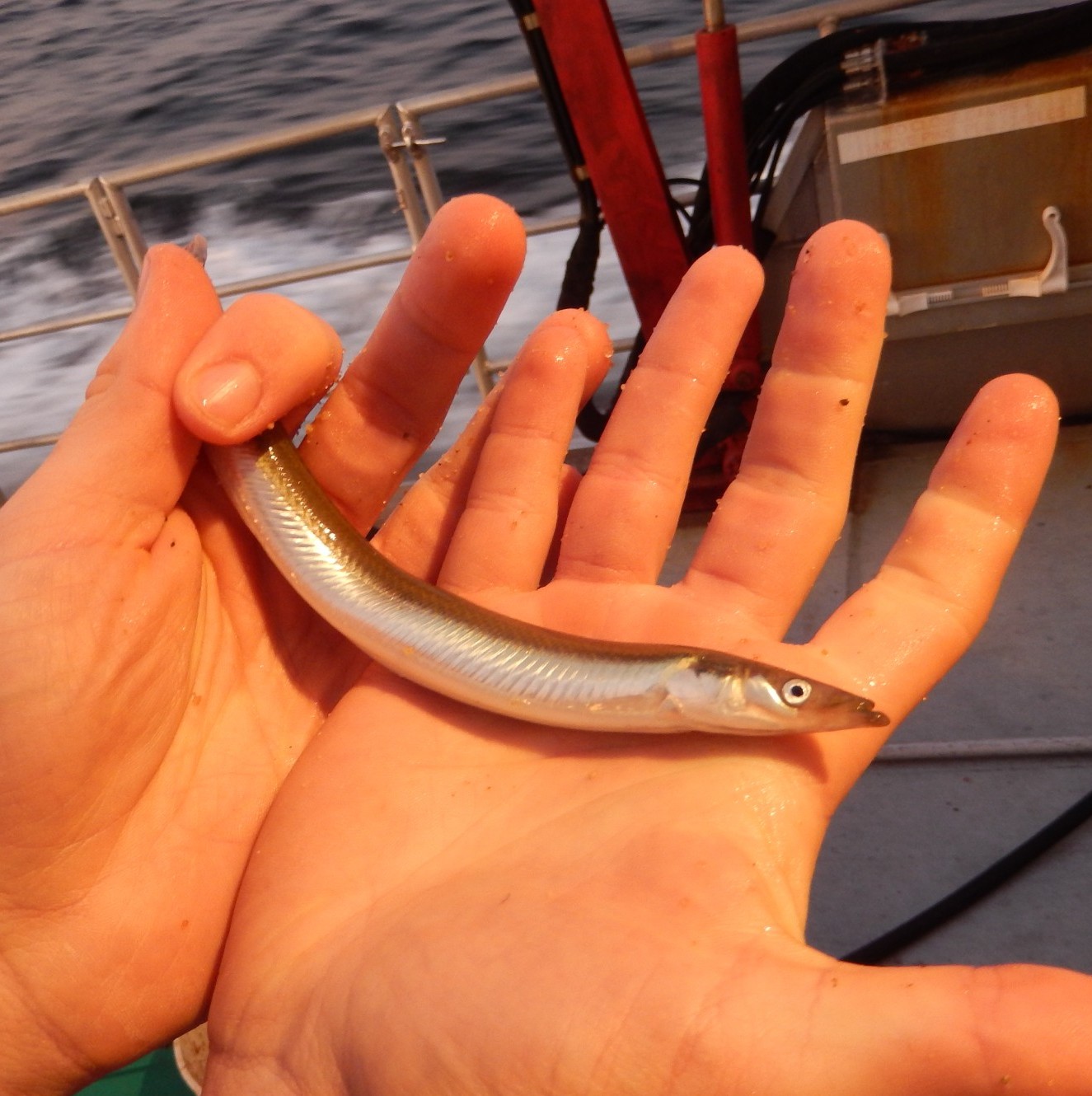
Despite the circumstances, the team’s mood was nothing short of elated. Our small beam trawl had just spilled hundreds of silvery fish on deck, wriggling like eels. They were Northern sand lance (Ammodytes dubius).
Running ripe adults.
Spawning.
Apparently, they like Thanksgiving, too.
—————
As the ship docked back in the Scituate, Mass., harbor that day, the rain thinned to hazy darkness.
“Let’s get a coffee and then on the road,” mumbled Chris, who led the team, “the real work of the experiments has just begun.”
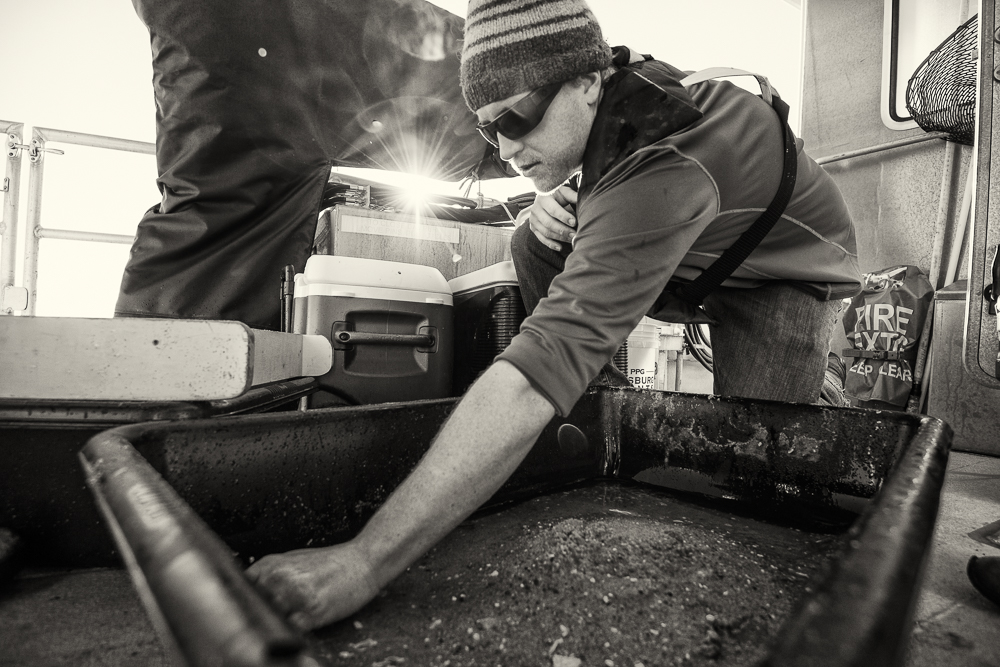
Chris Murray, a member of the research team, checks the contents of a sediment grab for sand lance. Photo: Jacob Snyder / Red Skies PhotographyThe RV Auk in early morning, getting ready for another sand lance sampling trip to Stellwagen Bank. Photo: Hannes Baumann
Stellwagen Bank, the National Marine Sanctuary just north of Cape Cod, is a true hotspot for some of the Atlantic Ocean’s most iconic creatures: whales, seals, tuna and seabirds, who all share a particular appetite for this one fish – sand lance. Some experts in the sanctuary’s ecosystem call this species its “backbone.” Others consider it a classic forage fish, responsible for transferring massive amounts of energy from lower to upper levels on the food chain.
Sand lance have a few interesting and rare characteristics. They alternate between schooling and foraging in the upper water column and extended periods of being almost completely buried in sand. For that, they rely on sand of a particular grain size and with very little organic content. It’s the kind of sand that defines large areas of the Stellwagen Bank.
Surprisingly little is known about the ecology and ecosystem importance of this sand lance species, although research on its European relatives (A. tobianus, A. marinus) is more advanced. In particular, experiments on early life stages of Northern sand lance have been lacking, save for some pioneering work on rearing methods of the related A. americanus (Smigielski et al. 1984). One question that was of particular interest to our lab involved the potential sensitivity of this fish species to carbon dioxide (CO2). That’s due to two other interesting and rare characteristics of sand lance. They spawn in late fall and winter in cold (and still cooling) waters, which is why their eggs and larvae develop extremely slow compared to other, more typical spring and summer spawning species. In addition, the species is found not in nearshore, but offshore coastal waters, where smaller seasonal and daily CO2 fluctuations more closely resemble oceanic conditions. Could sand lance offspring be particularly sensitive to higher levels of oceanic carbon dioxide predicted during the next 100 to 300 years as climate change effects intensify?
Adult sand lance, shown here, is the favorite food for whales, seals, tuna and seabirds. Photo: Hannes Baumann
Early results suggest that sand lance larva, shown in closeup, are particulary sensitive to higher levels of carbon dioxide. Photo courtesy of Hannes Baumann
Over the past two years (2016-17), we successfully found and sampled spawning ripe sand lance on Stellwagen Bank during a narrow window in late November. Eggs and sperm from adults were removed on board or after being transported live to our laboratory at UConn Avery Point. We reared newly fertilized embryos to hatch and to the feeding larval stage, under different sets of temperature and CO2 conditions, measuring survival and growth traits along the way.
Our experiments are still ongoing, and rearing protocols are being improved.
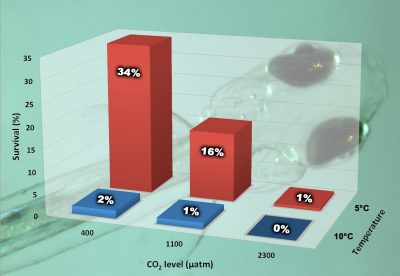
The preliminary findings, however, are stunning. Survival to hatch was dramatically reduced under elevated and high compared to baseline CO2 conditions. It was severely lowered at higher (10°C or 50°F) compared to lower temperatures (5°C or 41°F). Our second experiment this year appears to repeat this pattern. If these results continue, that would mean sand lance is one of the most CO2-sensitive species studied to date.
General interest in sand lance goes beyond its sensitivity to carbon dioxide. Given the species importance for the ecosystem and coastal economy, there are now increasing efforts to better understand sand lance feeding ecology, distribution and relationship to the rest of the food web. In this regard, funding of our project by the Northeast Sea Grant Consortium proved prescient and a seed for subsequent grants from MIT Sea Grant and the Bureau of Energy Management (BOEM) to continue the work. Surely, the groundswell of interest in sand lance is commensurate with its importance and will enable insights into better management strategies for sensitive ecosystems like those along the U.S. Atlantic coast.
This graphic shows survival to hatch rates of Northern sand lance embryos reared at three carbon dioxide levels and two temperatures. Graphic: Hannes Baumann
Collaborators on this project are:D. Wiley of the National Oceanic and Atmospheric Administration-Stellwagen Bank National Marine Sanctuary; P. Valentine of the U.S. Geological Survey; and S. Gallagher and J. Llopiz, both of the Woods Hole Oceanographic Institution.
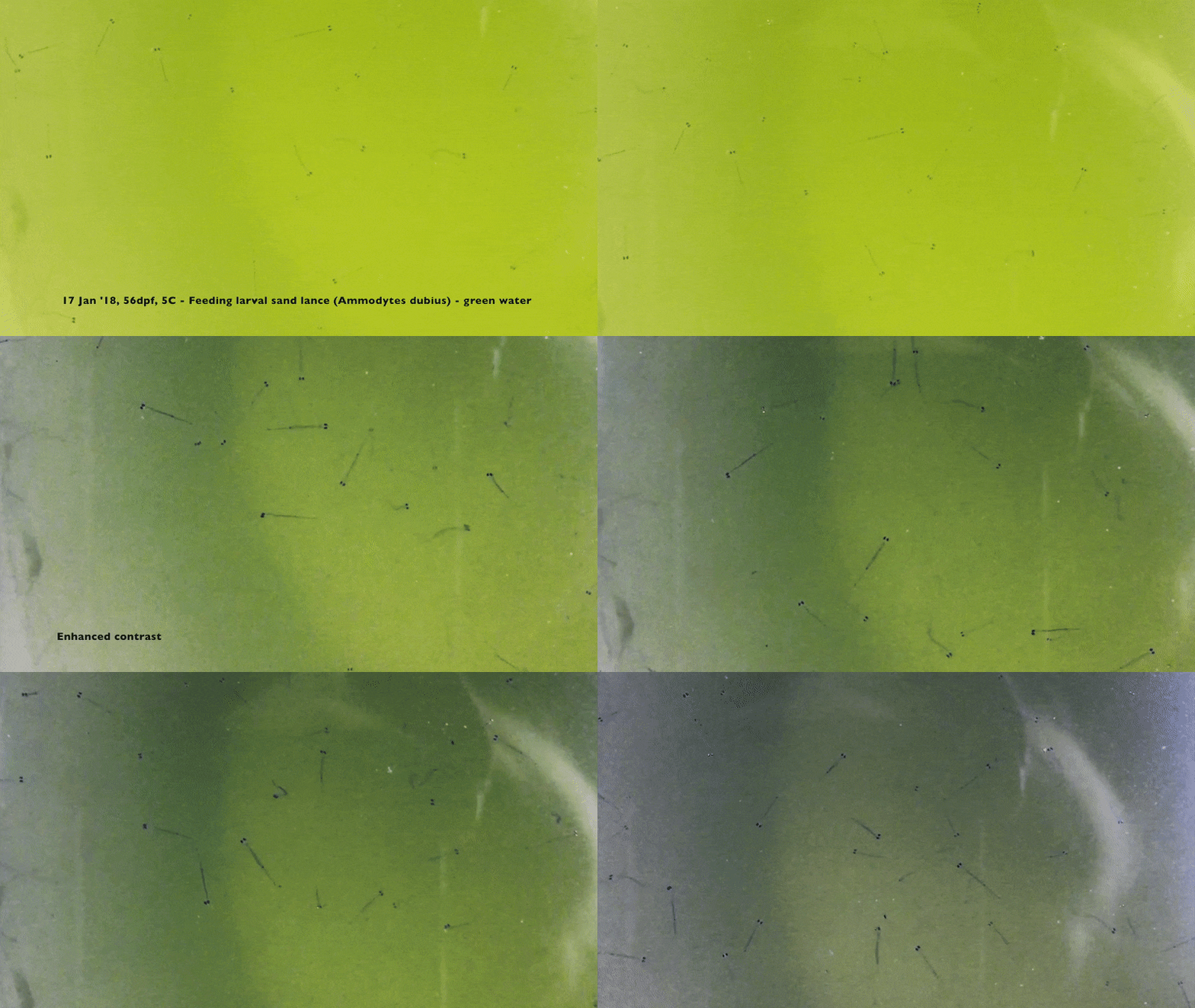
17 January 2018. Since November 2017, we have ongoing experiments with offspring of Northern sand lance (Ammodytes dubius), a winter-spawning forage fish of ecological importance along the North-American Atlantic coast. The clip below shows larvae almost two months after fertilization, developing nicely in 5C water and feeding actively on live rotifers. The experiments, led by Chris Murray for his PhD research, study the CO2 sensitivity of this species in our factorial larval rearing system. To our knowledge, this is the first time that this particular species has been reared that far under experimental conditions. Have a look!
Sand lance (Ammodytes dubius) larvae feeding in green water on rotifers